
News
AI SEO, GEO, AEO: What They Are and Why They Matter
Understanding AI, Generative, and Answer Engine Optimisation – and how to be visible where discovery is now happening
If you think SEO still means “rank high on Google” with a list of blue links, you’re only seeing part of the picture. In 2026, the way people discover information, evaluate brands, and make decisions has fundamentally changed. Search engines no longer simply return lists of links — they generate answers and conversations, summarise context, and guide entire journeys without users ever clicking through.
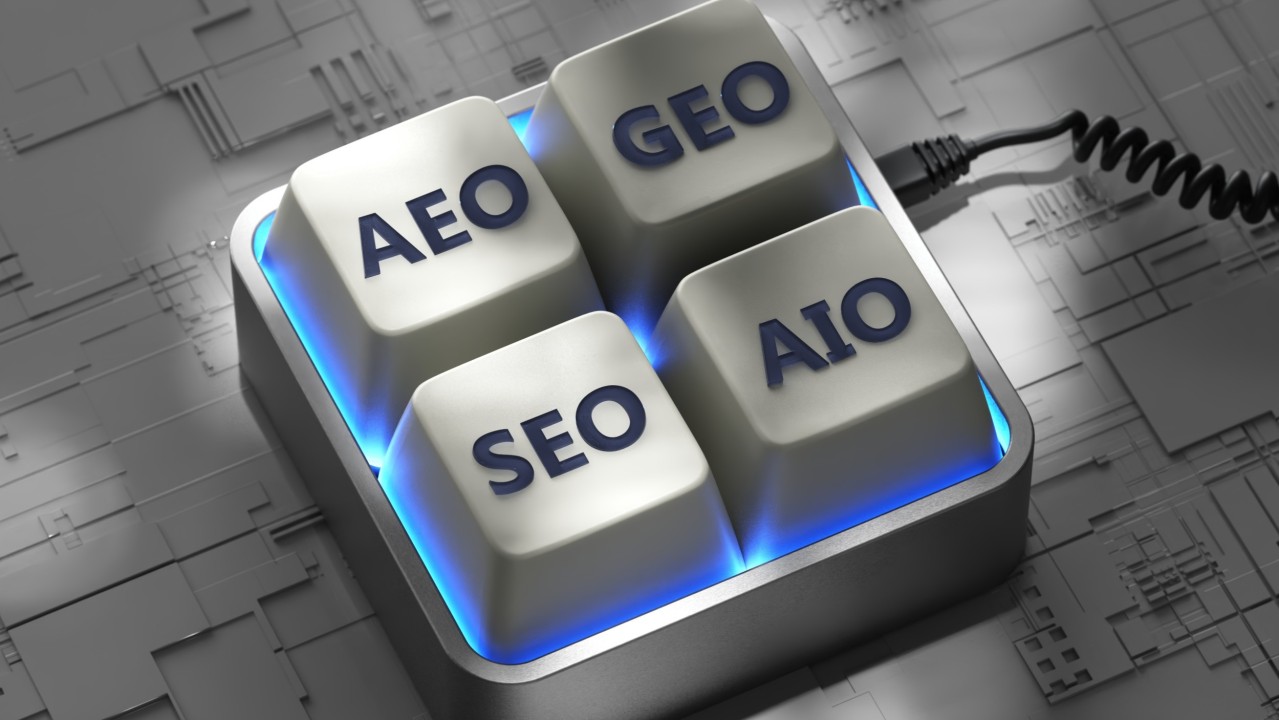
This evolution has given rise to new optimisation disciplines: AI SEO, GEO (Generative Engine Optimisation), and AEO (Answer Engine Optimisation). While all three relate to search visibility, they each address different goals in an AI-driven discovery ecosystem — and together they define how modern digital visibility really works.
Understanding these differences, and how they interact with traditional SEO, is essential for any business that intends to be found, read, trusted, and cited wherever audiences are searching — whether that’s via traditional SERPs, voice assistants, or AI-powered answer systems.
The Shift From Ranking to Understanding
Traditional SEO evolved around one central idea: match search queries with webpages through keywords, authority signals, and backlink profiles. For many years this meant ranking higher in search engine results pages and earning clicks.
Today’s AI search landscape no longer places all its value on click-throughs. Instead, it focuses on understanding — whether a piece of content can be interpreted, trusted, and reused by large language models and AI assistants to generate answers. This shift changes the entire optimisation goal from ranking to being referenced.
In this context:
- AI SEO is the overarching discipline that includes optimising traditional search signals and AI-specific visibility signals. It’s about increasing your visibility across both organic search and AI-generated discovery experiences.
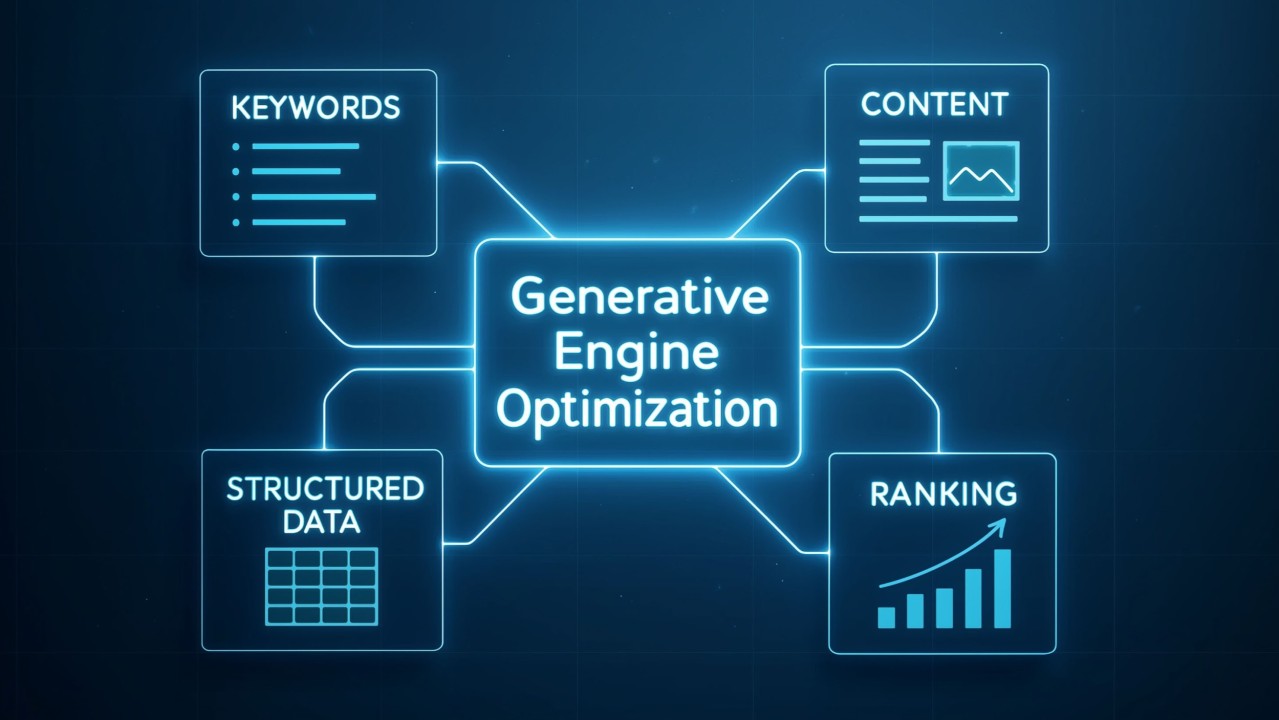
- GEO (Generative Engine Optimisation) focuses on preparing content so it gets pulled and cited by generative AI systems like ChatGPT, Google AI Overviews, Gemini, Perplexity and other AI tools that synthesise answers from multiple sources.
- AEO (Answer Engine Optimisation) focuses on structuring content specifically so AI search features — including featured snippets, voice search responses, and short AI answers — can extract and present it directly.
Together, these frameworks extend traditional SEO into a world where vis-à-vis queries and generative responses matter as much as rankings.
From Search Engines to Answer Engines
People are increasingly searching in natural language — conversational queries that look more like questions than keywords. They ask voice assistants for advice, they rely on chatbots for explanations, and they expect complete answers without clicking through to multiple sites. AI-powered platforms synthesise responses based on vast knowledge graphs and semantic understanding, not purely on keyword matching or backlink profiles.
This means the new optimisation task isn’t just about earning a top position on page one — it’s about making your content interpretable and useful to machines that are themselves trying to explain things to people.
Where traditional SEO might focus on match scores and technical signals, AI-centric optimisation focuses on:
- clarity
- structure
- context
- trustworthiness
- completeness of explanation
These qualities help AI determine when your content should be reused as part of an answer, not simply listed as a search result.
Answer Engine Optimisation (AEO): Being the Answer
AEO originated from early features like featured snippets and voice results, where content was formatted in a way that allowed concise extraction. Over time, as AI systems have become more sophisticated, this discipline has grown to include:
- answering specific user questions directly
- structuring content so it mirrors conversational queries
- segmenting answers into digestible chunks
- using schema markup to indicate human-ready Q&A format
AEO focuses on precision and extraction. It’s about being the content that AI or search features choose to pull — the single answer that appears before any click happens.
For example, social platforms, search engines, and AI assistants increasingly prefer content that answers a question and then expands on it with clear context, and that’s precisely where AEO excels.
Generative Engine Optimisation (GEO): Being the Source
While AEO zeroes in on specific extracted answers, GEO operates at a broader level.
Generative engines aren’t just displaying one direct answer — they are creating synthesised responses based on context, evidence, and multiple sources. GEO prepares your content so it gets cited, referenced, and woven into those answers.
Unlike SEO, which is limited to page ranking positions, GEO is about citation, context, and authority within generative summaries and conversational responses. This is why content structured for GEO aims to be:
- semantically rich
- easily parsed by large language models
- factually robust
- clearly structured for extraction
- equipped with trust signals and original insights
In essence, GEO helps you get mentioned in responses even if the user never visits your site — a form of visibility that traditional SEO did not prioritise.
Where Each Strategy Fits in the Content Landscape
Although separate in definition, AI SEO, GEO, and AEO are deeply interconnected and most effective when they work together as part of a unified strategy:
AI SEO (Umbrella Strategy): AI SEO blends traditional SEO fundamentals with AI-centric micro-optimisations. It ensures content is not only discoverable traditionally, but also interpretable by generative systems.
AEO (Answer-Ready Format): AEO is critical when your goal is to be the direct answer to a user query. It emphasises concise, conversational, and semantically clear responses — ideal for featured snippets and voice search.
GEO (AI Citation & Summarisation): GEO expands reach beyond individual questions, optimising content for citation in AI summaries and generative overviews. It is particularly relevant to broader topic coverage and establishing your brand’s conceptual authority.
Think of it this way: AI SEO is the foundation, AEO targets precise responses, and GEO ensures your content is cited across platforms and answer systems.
Why This Matters for Business Owners Today
The practical implications of these distinctions are profound.
First, traditional SEO remains relevant — especially for visibility in organic listings and long-tail keyword discovery. However, relying only on traditional SEO means you’re optimising for a world where users click links. The reality today is that many users don’t click at all; they receive the information they need directly from AI summaries or conversational interfaces.
Second, brands that invest in AEO and GEO expand their visibility beyond search engine result pages. They become part of answer streams, assistant responses, knowledge cards, and voice replies that shape perception long before a click happens.
Third, modern optimisation requires a blended approach — one where:
- content speaks to human intent
- machines can understand that content
- and AI systems trust your brand as a source of truth
The result is not just improved visibility — it’s deeper influence in the places where modern search begins.
What This Means for Your Content Strategy
Moving focus from keywords to concepts changes how you plan, structure, and execute content.
Content that excels in an AI environment generally has:
- clarity of purpose (each piece answers a definable question)
- robust structure (sections, schema, semantic cues)
- contextual depth (explains why, not just what)
- authority signals (data, original insight, citations)
- extractability (headings, summaries, clear answers accessible to AI)
These qualities help both humans and machines understand your content — a dual audience that is now central to visibility.
AI SEO Isn’t Optional — It’s Strategic
The era of “optimise for rankings, then celebrate clicks” is fading. Today’s digital landscape demands that businesses think in terms of explainability, AI understanding, and answer-ready visibility.
AI SEO, GEO, and AEO are not buzzwords. They represent how modern discovery systems behave — and they define where visibility will exist in the years ahead.
Traditional SEO built visibility through relevance and authority in search engines. AI SEO expands that visibility into conversational, generative, and answer-led environments. GEO and AEO are the tactics that make that expanded visibility possible.
If your content isn’t already optimised for AI interpretation and generative citation, you’re writing for a landscape that is disappearing — fast.











The Ultimate Social Media Guide
With the ever-growing power of social media, we use the latest techniques, video, and animation software to craft eye-catching social media assets that make your brand pop. Our designers, wielding Adobe Creative tools, create distinctive animations and graphics to illuminate your brand story and highlight your products or services. Want a unique design? No problem – we also offer bespoke designs to match your brand aesthetic.