
News
Answer Engines Are Replacing Search Results – Here’s How to Optimise for Them
Search is no longer about being found on a list.
Increasingly, users are asking questions and receiving answers — not links. AI assistants summarise information. Voice interfaces respond conversationally. Search engines now resolve intent rather than simply pointing users elsewhere.
This marks a fundamental shift in how digital visibility works.
In 2026, success in search is no longer determined by whether your page ranks highly, but by whether your content is understandable, trustworthy, and reusable by AI systems. If your content cannot be confidently interpreted and explained by machines, it will struggle to appear in the places where decisions are now being shaped.
This article explores how answer engines work, why traditional SEO approaches are no longer enough, and how businesses must structure content to remain visible in an AI-driven, conversational search landscape.
The Shift From Results to Resolution
Traditional search engines acted as gateways. They retrieved documents and allowed users to decide which one to trust. Answer engines behave differently. Their goal is to resolve a question quickly and confidently, often without offering a choice at all.
Instead of presenting ten blue links, AI systems synthesise information from multiple sources and present a single explanation. This explanation must feel complete, neutral, and reliable — otherwise the system risks misleading the user.
This changes the role of content dramatically. It is no longer enough to be relevant. Content must be explainable.
If your content cannot be summarised clearly, extracted accurately, and contextualised safely, it will not be chosen.
Why Rankings Matter Less Than Representation
In an answer-engine environment, visibility does not always result in traffic. A brand may appear repeatedly in AI-generated responses without a single click ever being recorded.
For many businesses, this feels uncomfortable at first. But influence often precedes action.
When AI assistants consistently reference a brand’s perspective, explanation, or terminology, that brand becomes familiar. It feels credible before a user ever visits the website. By the time a purchase decision arises, recognition already exists.
The real risk is not zero-click visibility. The real risk is zero representation.
If AI cannot confidently speak on your behalf, your brand is absent from the conversation entirely.
How AI Actually Interprets Content
AI assistants do not read content the way humans do. They do not appreciate visual design, emotional tone, or creative flair in the same way. They analyse structure, semantics, and meaning.
They look for clarity of definition, consistency of language, and logical progression of ideas. They assess whether a page introduces a topic clearly, explains it thoroughly, and reaches sensible conclusions.
Content that jumps between ideas, relies on implication, or prioritises persuasion over explanation is harder for AI to interpret accurately. When meaning is ambiguous, AI systems become cautious — and caution leads to exclusion.
In simple terms, AI prefers content that teaches.
Why Conversational Discovery Changes Everything
Voice search and AI chat interfaces have transformed how people ask questions. Queries are no longer short or transactional. They are conversational, contextual, and often layered.
A user might begin with a broad question, then refine it through follow-ups. AI systems must maintain continuity across this interaction, drawing on content that supports deeper explanation rather than surface answers.
This is why content written purely to target a single phrase performs poorly in conversational environments. Answer engines are not looking for a sentence that matches a query — they are looking for a source that understands the topic well enough to support an ongoing dialogue.
Content must therefore anticipate curiosity, not just answer a prompt.
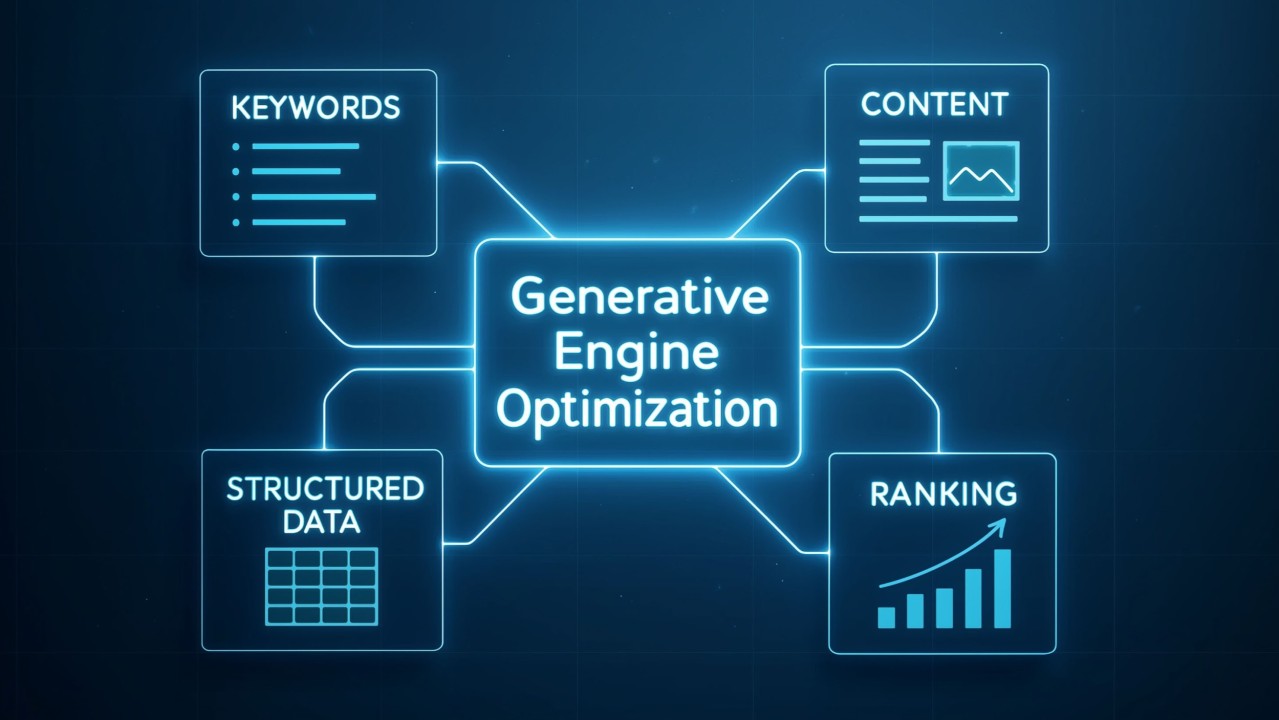
Structure Is the Foundation of Answer-Engine Optimisation
Structure has become one of the most important visibility signals in AI-driven search.
Clear headings, logical flow, and purposeful sectioning help AI systems identify what a page is about, what role each section plays, and which ideas are central versus supportive.
When structure is weak, AI struggles to determine relevance. When structure is strong, AI can extract meaning confidently and reuse it appropriately.
This does not mean writing robotic content or rigid FAQs. It means ensuring that ideas are introduced in a sensible order, expanded thoughtfully, and concluded clearly.
Structure is not formatting. It is reasoning made visible.
Why Explanation Now Beats Optimisation
Traditional SEO encouraged repetition — of keywords, phrases, and variations. Answer engines reward explanation instead.
Content that explains a concept thoroughly — what it is, why it matters, how it works, and what it affects — gives AI systems the confidence to reuse that explanation in summaries and responses.
This is because explanation demonstrates understanding. Repetition does not.
When content is written to genuinely help someone understand an issue, it naturally includes the language, context, and nuance that AI systems need to interpret intent accurately.
Optimisation has shifted from manipulation to meaning.
Context Is as Important as Content
AI assistants rarely answer questions in isolation. They infer context — both from the query itself and from broader patterns of behaviour.
This makes clarity essential. Content must define terms before using them, avoid assuming prior knowledge, and clearly distinguish between similar concepts. When meaning relies on implication or industry shorthand, AI is more likely to misinterpret it.
The more explicit and self-contained an explanation is, the more confidently it can be reused.
Clarity protects your message from distortion.
Why Narrow Pages Struggle in an Answer-Engine World
Pages designed to target a single keyword often lack depth. They may answer one question briefly, but they cannot support follow-up queries or deeper exploration.
Answer engines prefer content that can flex — that can answer an initial question and then provide additional context as the conversation develops.
This is why comprehensive, concept-led content consistently outperforms narrow, phrase-driven pages. Authority is not demonstrated by coverage alone, but by the ability to explain a topic from multiple angles without contradiction.
Answer engines value understanding, not just answers.
Consistency Builds AI Confidence
AI systems assess reliability by looking for consistency across content. When a brand explains a topic the same way across multiple articles, pages, and formats, AI gains confidence in that source.
Inconsistent language, shifting definitions, or conflicting explanations weaken trust. Over time, this affects how often — and how prominently — a brand is referenced.
Consistency does not mean repetition. It means coherence.
Why Tone and Neutrality Matter More Than Ever
Answer engines are cautious by design. They avoid content that feels exaggerated, overly promotional, or biased.
Content that is balanced, measured, and informative is far more likely to be reused. This does not mean brands must be bland — but they must be credible.
The more trustworthy your content sounds, the safer it is for AI to reference.
Answer Engines Reward Authority, Not Tricks
There is no shortcut to answer-engine visibility.
AI systems rely heavily on topical authority — the extent to which a brand demonstrates sustained understanding of a subject over time. This is why content ecosystems outperform isolated pages.
When AI sees consistent, high-quality explanation across related topics, it becomes comfortable referencing that source repeatedly.
Answer-engine optimisation is not a tactic. It is the outcome of doing content properly.
Visibility Without Clicks Is Still Visibility
Many businesses worry about losing traffic in a zero-click world. But influence often happens before action.
When a brand is consistently referenced in AI responses, it becomes familiar. When the time comes to act, users often seek out brands they already recognise and trust.
Answer engines shape perception long before conversion.
Being absent from those answers is far more damaging than losing a click.
What Optimising for Answer Engines Really Requires
Optimising for answer engines means shifting priorities.
It means focusing on:
- clarity over cleverness
- explanation over optimisation
- structure over decoration
- consistency over novelty
- authority over tactics
Ironically, the best way to optimise for AI is to write content that is genuinely useful to humans.
Final Thoughts: If You Can’t Be Explained, You Can’t Be Chosen
Search is no longer about ranking. It is about being understood.
Answer engines prioritise content they can interpret confidently and represent accurately. Brands that explain clearly, structure intelligently, and demonstrate real understanding will remain visible — even as traditional search continues to change.
The future of discovery belongs to brands that teach, not those that chase.
If your content can’t be explained by AI, it won’t be found by users.














The Ultimate Social Media Guide
With the ever-growing power of social media, we use the latest techniques, video, and animation software to craft eye-catching social media assets that make your brand pop. Our designers, wielding Adobe Creative tools, create distinctive animations and graphics to illuminate your brand story and highlight your products or services. Want a unique design? No problem – we also offer bespoke designs to match your brand aesthetic.