News
How AI Is Transforming the Designer’s Toolkit — and What It Means for Human Creativity
Artificial Intelligence (AI) is no longer a futuristic concept confined to sci-fi films or research labs; it is an integral part of the modern creative process. From automating routine design tasks to generating complex visual concepts, AI is rapidly reshaping the way designers think, work, and create. Yet, this technological evolution also prompts a vital question — what happens to human creativity when machines begin to design alongside us?
This article explores how AI is transforming the designer’s toolkit, enhancing workflows, and challenging traditional notions of artistry. It also considers the broader implications for creativity in an age where algorithms, not just artists, generate ideas.
The Growing Presence of AI in the Design Industry
In the past decade, the integration of AI into design tools has accelerated at an astonishing pace. According to a 2023 survey by Adobe, over 70% of creative professionals worldwide now use some form of AI-powered tool in their workflow, whether for image generation, content optimisation, or design automation [https://www.adobe.com/uk/creativecloud.html].
In the UK specifically, the design sector has embraced digital transformation wholeheartedly. The UK design economy contributed around £97.4 billion in gross value added (GVA) in 2022, according to the Design Council [https://www.designcouncil.org.uk/], with digital and AI-based design tools becoming a crucial component of this growth. The integration of AI into design workflows is not just a matter of efficiency — it is shaping the way ideas are generated and communicated.
1. Automating the Mundane: AI and Workflow Efficiency
One of the first and most impactful ways AI has influenced design is by automating repetitive and time-consuming tasks. Designers once spent hours resizing images, colour-correcting photos, or generating layout variations. Today, AI tools like Adobe Firefly, Figma’s AI Assist, and Canva Magic Design can perform these actions in seconds.
By delegating routine processes to machines, designers can redirect their energy towards creative exploration and conceptual development. For example, Adobe’s Sensei technology analyses patterns in a designer’s work to suggest design elements that match the overall aesthetic. Similarly, AI-powered background removal tools and smart object detection streamline editing, enabling designers to achieve professional results with minimal manual intervention.
Automation has not diminished the designer’s role — it has elevated it. Freed from repetitive production tasks, creatives are increasingly focusing on higher-order thinking, brand storytelling, and emotional resonance.
2. AI-Powered Design Generation: From Prompts to Prototypes
The emergence of generative AI has arguably had the most dramatic impact on design in recent years. Platforms such as Midjourney, DALL·E 3, and Runway ML enable users to create complex visual compositions simply by describing them in words.
For instance, a designer can input “a minimalist poster featuring geometric patterns and a modern sans-serif font” and receive multiple design variations instantly. This ability to translate textual prompts into visuals is revolutionising how designers brainstorm, iterate, and pitch concepts.
However, generative design is not entirely new. In architecture and product design, generative algorithms have long been used to optimise structures for efficiency. What AI has done is make this approach accessible and intuitive to graphic designers, UX professionals, and content creators.
Still, while AI-generated designs can be stunning, they are not perfect replacements for human creativity. Machines can interpret prompts but cannot fully grasp context, emotion, or cultural nuance — aspects that make design truly impactful.
3. Enhancing Personalisation and User Experience
AI’s ability to analyse massive datasets allows for a new level of personalisation in design. Web and app designers can use AI-driven insights to create adaptive layouts, dynamic interfaces, and personalised content that responds to user behaviour in real time.
For example, an e-commerce site can use AI to dynamically adjust its design elements based on browsing history or time of day. This type of “intelligent design” creates more engaging user experiences and drives higher conversion rates.
In the UK, where e-commerce accounted for nearly 30% of total retail sales in 2023 [https://www.ons.gov.uk/businessindustryandtrade/retailindustry/datasets/retailsales], AI-driven design optimisation plays a crucial role in helping businesses stand out in an increasingly competitive digital landscape.
4. AI in Branding and Marketing Design
AI tools have also begun reshaping how branding and marketing visuals are conceptualised and deployed. Predictive analytics help designers understand what types of visuals are most likely to engage audiences based on factors like demographics, browsing patterns, and sentiment analysis.
For instance, tools like Canva’s Brand Kit and Adobe Express use AI to suggest brand colour palettes, typography combinations, and layout adjustments consistent with existing visual identities.
Meanwhile, generative AI enables rapid content scaling — producing multiple ad variations or social media graphics that align with brand tone and style. This is invaluable for agencies managing dozens of campaigns across platforms like Instagram, TikTok, and YouTube.
However, this convenience comes with an ethical dimension. If AI-generated branding becomes the norm, originality and authenticity risk dilution. Designers must therefore ensure that AI enhances rather than replaces their creative voice.
5. The Rise of AI-Assisted UX and UI Design
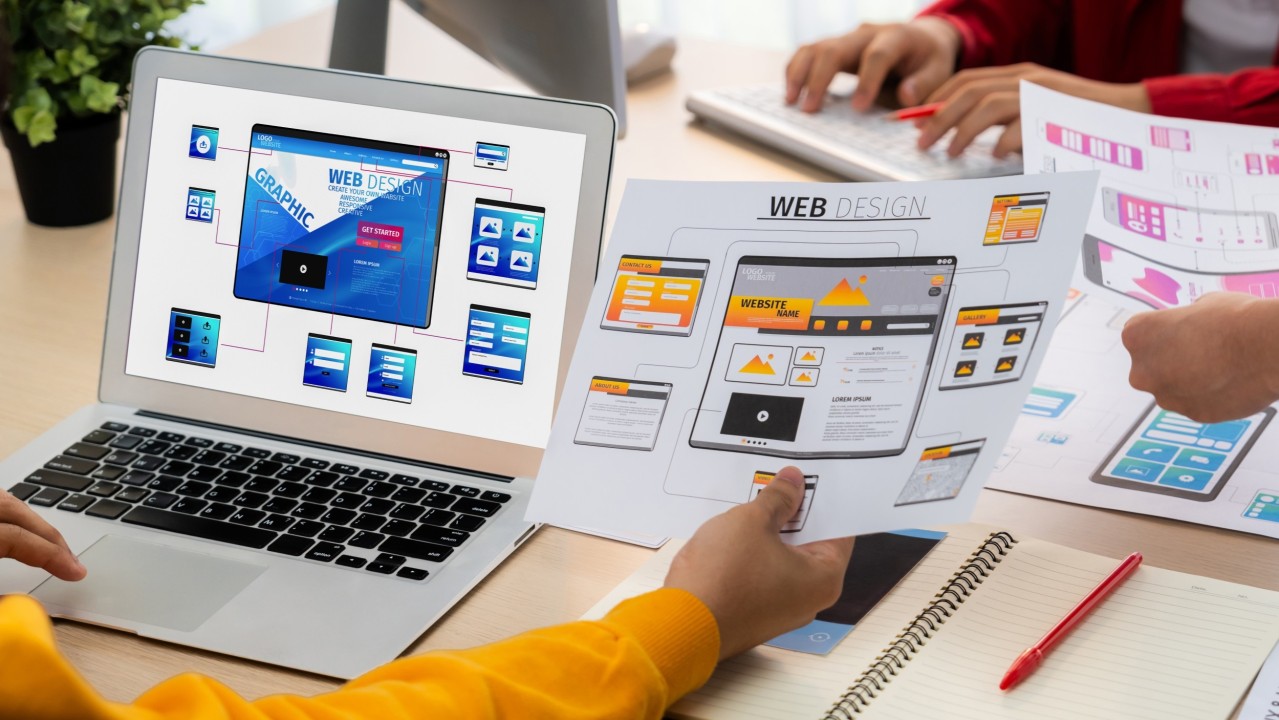
User experience (UX) and user interface (UI) design have seen dramatic improvements thanks to AI. Tools like Uizard and Framer use AI to transform sketches into fully functional prototypes. AI-powered usability testing platforms analyse how users interact with designs and recommend adjustments for better engagement.
Predictive algorithms can even anticipate user actions, allowing for more intuitive interface layouts. This human-AI collaboration ensures websites and apps are not only visually appealing but also accessible and user-centred.
Moreover, accessibility has improved through AI-driven features such as automated alt-text generation, contrast adjustments, and voice navigation suggestions — ensuring inclusivity in design.
6. How AI Affects Human Creativity
While AI empowers designers, it also raises questions about the nature of creativity itself. Can a machine truly be creative, or does it simply remix existing data into something new?
AI models are trained on vast datasets of existing art, photography, and design, which means their “creativity” is inherently derivative. Yet, human creativity has always built upon what came before — the difference lies in intention and interpretation.
Designers use AI as a tool for inspiration, not replacement. The creative process remains guided by human intuition, empathy, and cultural understanding — qualities machines cannot replicate. In this sense, AI is not replacing creativity but redefining how it manifests.
7. Ethical Considerations in AI-Driven Design
As AI tools become more powerful, ethical challenges emerge. Questions around data privacy, intellectual property, and authorship are increasingly pressing.
For instance, when a designer uses an AI model trained on copyrighted images, who owns the resulting artwork? Some platforms now allow users to train AI on their own datasets to mitigate these concerns, but the issue remains complex.
There are also concerns about bias in AI-generated designs. If the dataset contains cultural or gender biases, the outputs may unintentionally perpetuate stereotypes. Ethical design in the AI era requires transparency, accountability, and diversity in training data.
In the UK, initiatives like the Centre for Data Ethics and Innovation (CDEI) [https://www.gov.uk/government/organisations/centre-for-data-ethics-and-innovation] aim to guide responsible AI development, including applications within creative industries.
8. Upskilling Designers for the AI Era
AI is not eliminating design jobs — it is transforming them. The World Economic Forum predicts that by 2025, automation and AI will create 97 million new roles globally, many requiring creative and digital skills [https://www.weforum.org/reports/the-future-of-jobs-report-2023].
Designers must therefore evolve alongside technology. Key skills now include:
- Prompt Engineering: Knowing how to communicate effectively with AI tools.
- Data Literacy: Understanding analytics to create informed design strategies.
- Ethical Awareness: Ensuring fairness and inclusivity in AI-generated designs.
The UK government’s “Digital Skills for the Future” initiative also emphasises reskilling the creative workforce to adapt to new technologies [https://www.gov.uk/government/publications/digital-skills-and-jobs].
9. The Collaboration Between Humans and Machines
The most successful designers in the AI age will not compete with machines but collaborate with them. Human creativity and machine precision can coexist harmoniously.
AI can generate dozens of concepts in seconds, but it takes a human designer to identify which one aligns with brand values and emotional goals. This symbiosis mirrors how photographers embraced digital cameras — not as a replacement but as a new medium for expression.
Design educators are now incorporating AI literacy into their curricula. Institutions such as the Royal College of Art and Central Saint Martins in London are exploring how AI can become a creative partner rather than a threat to originality.
10. The Future of AI-Enhanced Design
Looking forward, AI’s role in design will continue to evolve. Emerging technologies like real-time generative video, adaptive typography, and voice-based design interfaces will further blur the line between human and machine creativity.
We may see entirely new design disciplines emerge — such as “AI Art Direction,” where creatives specialise in curating and refining machine-generated content. Similarly, as augmented and virtual reality gain traction, AI will play a key role in creating immersive, responsive design environments.
The ultimate challenge will be maintaining a balance: leveraging AI’s computational power without losing the human touch that makes design meaningful.
11. Challenges Ahead: Authenticity and Overreliance
Despite its benefits, there’s a danger that excessive reliance on AI may lead to creative homogenisation. When multiple designers use similar AI models, outputs risk becoming repetitive and predictable.
Designers must consciously inject originality, emotion, and storytelling into their work to avoid falling into the trap of “algorithmic sameness.” This balance between inspiration and imitation will define the next era of digital creativity.
Additionally, clients and audiences will likely demand greater transparency regarding AI involvement in creative work. Disclosing when AI is used in campaigns may become standard ethical practice, much like content labelling on social media.
12. The Human Advantage: Emotion, Context, and Meaning
Ultimately, creativity is not just about producing visually appealing designs — it is about communicating meaning, provoking emotion, and shaping culture. AI lacks lived experience and emotional depth. It cannot understand humour, irony, or nostalgia in the same way humans do.
Designers’ greatest advantage, therefore, lies in empathy and storytelling. The human ability to interpret social cues, cultural shifts, and aesthetic trends ensures that creativity remains uniquely ours — even in an age dominated by machines.
Conclusion: A New Era of Collaborative Creativity
Artificial Intelligence is transforming the designer’s toolkit beyond recognition. It streamlines workflows, enhances personalisation, and opens up exciting new creative possibilities. Yet, it also challenges us to rethink what creativity means in a world where algorithms can generate art.
For UK designers and creative businesses, the key lies in balance. Embrace AI as a powerful ally, but don’t let it replace human intuition, emotion, and cultural insight. The future of design is not man versus machine — it is man with machine.
As AI continues to evolve, the most successful designers will be those who learn to collaborate with technology — using it not as a crutch, but as a catalyst for deeper, more meaningful creativity.