News
AI Isn’t Replacing Marketers – It’s Redefining the Skillset That Matters
Why strategy, creativity, and human judgement are becoming more valuable as automation increases
Every major technological shift in marketing has sparked the same fear: that human roles will be replaced by machines. AI has simply amplified that anxiety because of its speed, scale, and visibility. Tools now write copy, generate designs, analyse data, schedule campaigns, personalise messaging, and automate entire workflows that once required teams of specialists.
From the outside, it looks like marketing is being automated out of existence.
But that perception misses what is actually happening.
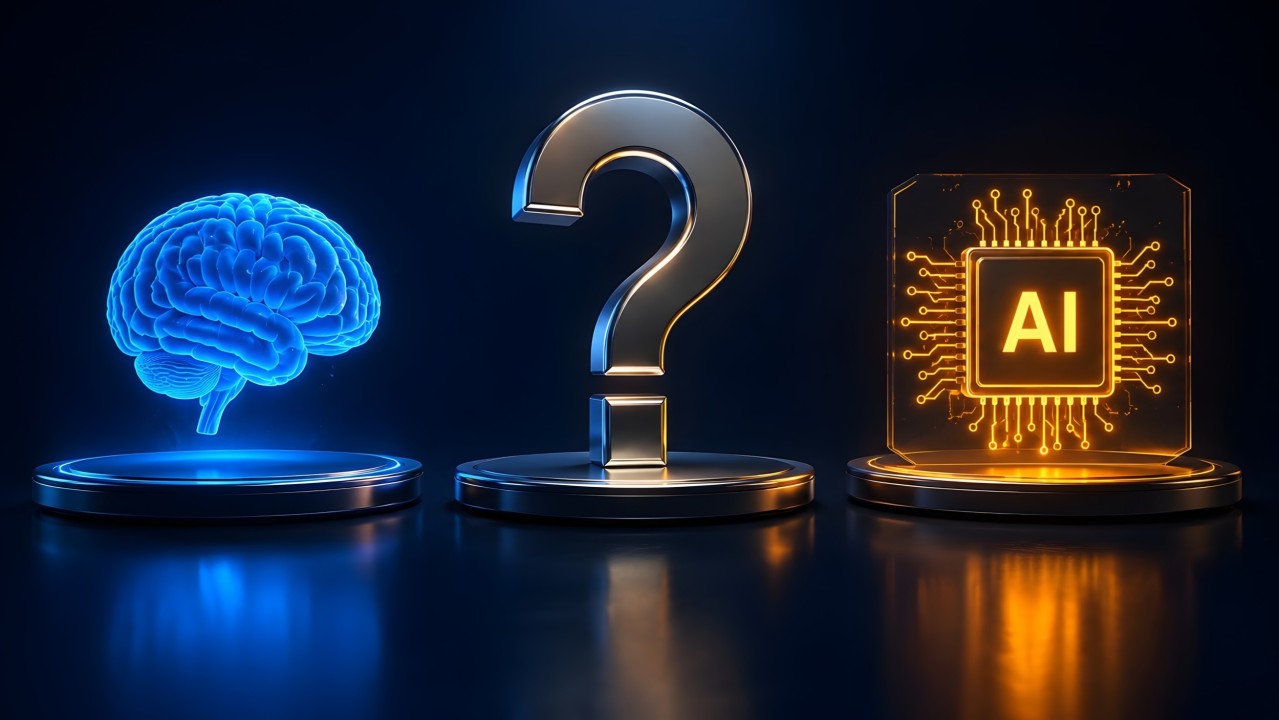
AI is not replacing marketers. It is replacing tasks. And in doing so, it is elevating the importance of the skills that machines cannot replicate — strategic thinking, creative judgement, contextual understanding, and human empathy.
In 2026, the most valuable marketers are not those who execute the fastest or produce the most output. They are the ones who can think clearly, decide wisely, and connect meaningfully in an increasingly automated world.
This article explores how AI is reshaping marketing roles, why human skills are becoming more important rather than less, and what capabilities will define successful marketers in the years ahead.
The Automation Illusion: Why Output Is No Longer the Differentiator
One of the most visible effects of AI in marketing is output inflation. Content can be produced faster, campaigns can be launched more quickly, and data can be processed at unprecedented speed. This creates the illusion that productivity equals value.
In reality, abundance changes the rules.
When everyone can generate content, content itself becomes less valuable. When campaigns can be deployed instantly, execution speed stops being a competitive advantage. When analysis is automated, insight — not data — becomes the differentiator.
AI has removed friction from marketing execution. But friction was never where strategic value lived.
The role of the marketer is shifting away from doing and toward deciding.
From Operators to Orchestrators
Traditional marketing roles often focused on operating tools: managing platforms, configuring campaigns, optimising settings, producing assets, and reporting on performance. AI increasingly handles these functions more efficiently than humans ever could.
This does not remove the need for marketers — it changes their role.
Modern marketers are becoming orchestrators. They decide:
- what problems are worth solving
- which audiences matter most
- what messages should exist
- where automation should be applied
- when human intervention is required
- how brand integrity is protected
AI can execute instructions. It cannot define intent. It can surface patterns. It cannot judge meaning. It can generate options. It cannot choose what is right.
That responsibility remains human.
Why Strategy Becomes More Valuable as Automation Increases
Strategy is often misunderstood as planning or goal-setting. In reality, strategy is the discipline of making choices under uncertainty. It is about deciding what not to do as much as what to do.
As AI removes operational constraints, strategic clarity becomes more important, not less. Without it, automation simply accelerates confusion.
Marketers now face more options than ever:
- more channels
- more formats
- more data
- more targeting capabilities
- more content possibilities
AI can generate ideas endlessly. Strategy determines which ideas matter.
The marketers who thrive will be those who can frame problems clearly, set direction confidently, and ensure that automation serves purpose rather than creating noise.
Creativity in the Age of AI: From Production to Perspective
AI can generate creative assets. It can write copy, design visuals, and suggest variations. What it cannot do is care whether those outputs are meaningful, relevant, or culturally appropriate.
This changes the role of creativity.
Creativity is no longer about producing assets. It is about perspective — seeing what others miss, understanding nuance, and shaping ideas that resonate emotionally.
In an AI-saturated landscape, originality does not come from novelty alone. It comes from insight. From understanding people deeply enough to say something that actually matters to them.
Human creativity provides:
- emotional intelligence
- cultural awareness
- contextual sensitivity
- narrative judgement
- taste and restraint
AI can assist creativity. It cannot replace creative discernment.
Human Judgement as the New Competitive Advantage
Perhaps the most undervalued skill in modern marketing is judgement — the ability to make sound decisions in complex, ambiguous situations.
AI excels at optimisation within defined parameters. It struggles when trade-offs are subtle, consequences are long-term, or values are at stake.
Marketers increasingly need to decide:
- when automation goes too far
- when personalisation becomes intrusive
- when speed undermines quality
- when performance metrics conflict with brand trust
- when not to act at all
These are not technical decisions. They are judgement calls.
As automation increases, the cost of poor judgement increases with it. One misaligned automated campaign can damage trust at scale.
Human oversight is not a bottleneck. It is a safeguard.
Why Empathy Cannot Be Automated
Marketing ultimately exists to influence human behaviour. That requires empathy — the ability to understand how people feel, what they value, and why they act.
AI can analyse behaviour patterns, but it cannot experience emotion. It can predict responses, but it cannot understand meaning in a human sense.
Empathy allows marketers to:
- frame messages sensitively
- recognise emotional context
- anticipate reactions
- build trust over time
- communicate with respect
In an era of automated messaging, empathy becomes a differentiator. Audiences are increasingly aware when communication feels mechanical or manipulative.
Human marketers ensure that automation remains human-centred.
The Shift From Specialists to Strategic Generalists
As AI takes on specialist execution tasks, marketing roles are becoming broader rather than narrower. Deep platform expertise is less valuable than the ability to connect disciplines.
Modern marketers must understand:
- brand and positioning
- content and storytelling
- data and insight
- user experience
- AI capabilities and limitations
- ethics and governance
This does not mean doing everything — it means understanding enough to make informed decisions and guide intelligent use of automation.
The future marketer is not a tool operator. They are a systems thinker.
Why Marketing Leadership Matters More Than Ever
AI lowers the barrier to entry for marketing activity. Almost anyone can launch campaigns, generate content, and analyse results. What it does not provide is leadership.
Leadership is required to:
- set ethical boundaries
- align automation with brand values
- protect long-term trust over short-term gains
- invest in quality rather than quantity
- resist optimisation for optimisation’s sake
Without leadership, AI simply amplifies whatever thinking already exists — good or bad.
Strong marketing leadership ensures that technology enhances purpose rather than replacing it.
Rethinking Performance in an Automated World
One of the dangers of AI-driven marketing is over-optimisation. When every metric can be tracked and improved, marketers risk losing sight of what actually matters.
Performance must be redefined to include:
- brand perception
- trust and credibility
- emotional resonance
- long-term loyalty
- customer confidence
These outcomes are influenced by AI, but they cannot be optimised mechanically. They require human interpretation and intentional trade-offs.
Not everything that can be measured should be maximised.
The Ethical Dimension of AI in Marketing
As AI becomes more powerful, ethical responsibility becomes unavoidable. Marketers must decide how far to push personalisation, automation, and behavioural influence.
Ethical judgement involves questions such as:
- Are we respecting consent and privacy?
- Are we being transparent about automation?
- Are we manipulating behaviour or supporting decision-making?
- Are we prioritising trust over conversion?
AI does not answer these questions. Humans must.
The brands that win long-term will be those that treat ethics as strategy, not compliance.
The New Marketing Skillset That Actually Matters
In an AI-enabled world, the most valuable marketing skills are not technical. They are human.
The marketers who thrive will be those who can:
- think strategically
- communicate clearly
- exercise sound judgement
- understand people deeply
- integrate technology responsibly
- protect brand integrity
- lead with intent
AI raises the baseline. Human capability defines the ceiling.
Final Thoughts: AI Changes the Work, Not the Worth
AI will continue to automate marketing tasks. That is inevitable. But automation does not diminish the value of marketers — it clarifies it.
The future of marketing belongs to those who can think, decide, and create with purpose. Those who understand that technology is a tool, not a substitute for insight. Those who recognise that in a world of infinite output, meaning becomes scarce — and therefore valuable.
AI isn’t replacing marketers.
It’s making the ones who think, judge, and lead more important than ever.