News
From Flat to Fluid: How ‘Liquid Design’ Is Changing Digital Experiences
In the ever‑shifting landscape of digital design, a new visual philosophy is emerging that challenges the rigidity of flat layouts and static grids. Known as “Liquid Design,” this approach prioritises adaptable, flowing interfaces that respond to context, movement, and user behaviour. Rather than imposing static rectangles and fixed grids, liquid design embraces fluidity — layouts that move, reshape, breathe and transform as users interact with them.
In 2026, liquid design is no longer a niche experiment. It’s reshaping how websites, apps, and digital products feel — making them more intuitive, expressive, and engaging. This shift is a direct response to evolving user expectations: people no longer want static pages and lifeless interactions. They want interfaces that feel alive, responsive, and personalised.
This article explores the rise of liquid design, what it means for digital experiences today, why it matters for designers and brands, and how it is influencing both aesthetics and usability.
Why Flat Design Had Its Time — And Why It’s Changing
For much of the 2010s and early 2020s, flat design dominated digital aesthetics. Flat design prioritised simplicity, clarity and minimalism — stripping away skeuomorphism, gradients and shadows in favour of clean typography, bold colours and clear iconography. It worked extremely well for early mobile UI paradigms and responsive layouts, especially as screens diversified in size and resolution.
Flat design solved real problems: it improved legibility, reduced visual noise and helped interfaces scale across devices. Indeed, UK usage data shows that mobile internet use has significantly surpassed desktop, making responsive, simplified interfaces essential for engagement. (https://www.forbes.com/uk/advisor/business/software/website-statistics/?utm_source=chatgpt.com)
However, as technology and user expectations have matured, the limitations of strict flatness have become more apparent. Flat layouts can feel sterile, predictable or lifeless — and are often indistinguishable from one another. They were excellent for hierarchy and structure, but not ideal for emotional resonance or dynamic interaction.
Consumers today expect digital products that feel alive and responsive, not static and clinical. Users seek delight, personality, and interfaces that adapt to context — not just function.
This is where liquid design comes in.
What Liquid Design Really Means
At its core, liquid design is about embracing fluidity — interfaces that adapt, shift, and respond to user interaction and environmental variables:
- Responsive but dynamic layouts — content and containers that smoothly reshape, expand or contract, not just snap between breakpoints.
- Motion as feedback — subtle transitions, animated states and frictionless movement that guide users and convey system behaviour.
- Context‑aware structure — interfaces that adapt based on user behaviour, device orientation, time of day or interaction history.
- Tactile interactions — drag, swipe, bounce, spring‑like movement that makes digital elements feel alive.
- Spatial continuity — layering, parallax, depth and movement that bridge the gap between flat pages and immersive experiences.
Liquid design moves beyond simply “responsive” layouts — it treats layout and interface states as adaptive systems that exist on a continuum, rather than a set of fixed breakpoints.
Importantly, fluid doesn’t mean chaotic. It means adaptive and intentional adaptation — where movement and transformation serve clarity, not distraction.
Why Liquid Design Matters in 2026
Several converging trends make liquid design especially relevant today:
1. Users Expect Interaction, Not Presentation
Modern users don’t want to view a screen; they want to interact with it. Interfaces that respond to gestures, clicks, scrolls and context keep users engaged longer and make experiences feel more intuitive. In an age where attention is fractured and competition for engagement is intense, motion and fluidity help retain focus.
2. Devices Are More Diverse Than Ever
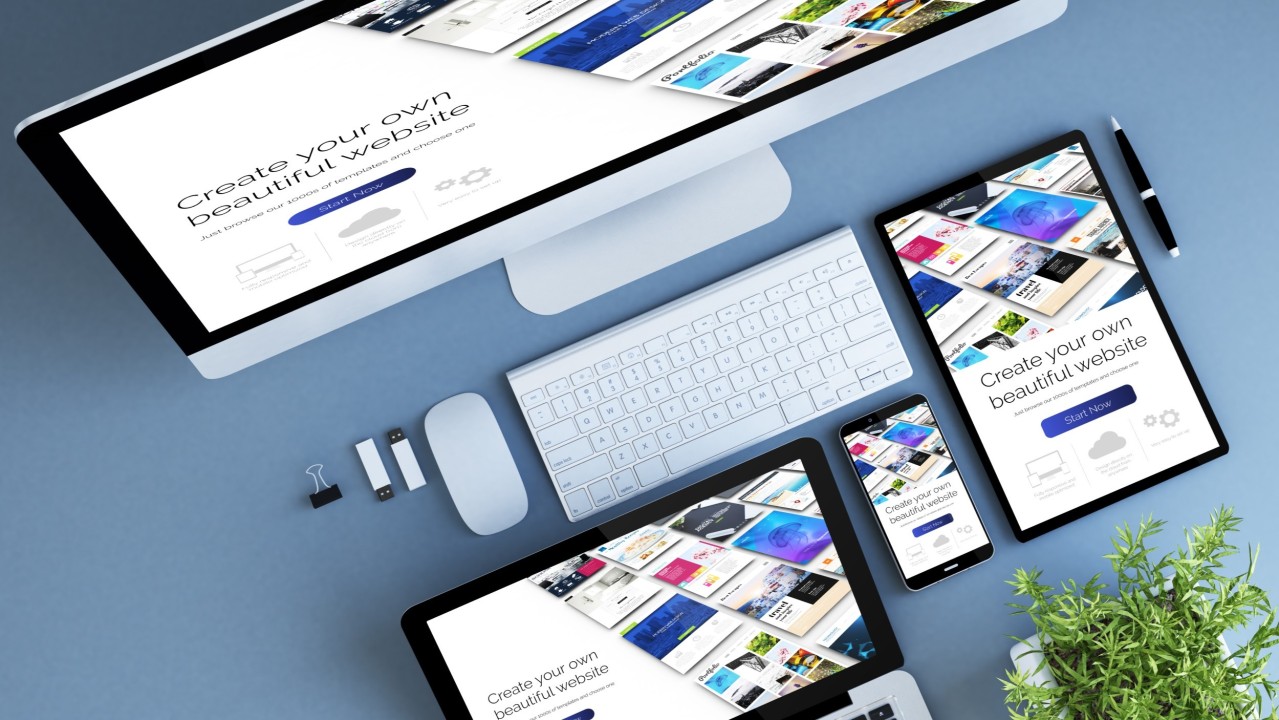
With foldable phones, tablets, large monitors, AR/VR headsets and automotive displays, digital content must adapt across an extraordinary range of screen types and interaction models. Traditional fixed breakpoints can feel arbitrary; fluid layouts fill the gap by responding smoothly to any context.
3. Performance and Semantics Evolve Together
Modern web technologies (CSS custom properties, variable fonts, GPU‑accelerated animation, responsive images and container queries) make it possible to create fluid experiences that are performant — something that was far harder a decade ago.
4. Design Is Increasingly A Brand Differentiator
In a world where users can switch apps or brands with a tap, experiences that feel personalised and dynamic strengthen brand perception. Fluid interactions signal quality, attention to detail and a user‑centric mindset — all hallmarks of modern digital leadership.
How Liquid Design Enhances UX & Usability
Liquid design isn’t just about aesthetics — it also improves usability in meaningful ways:
● Contextual Feedback
When elements move or respond, users understand cause and effect more naturally. A button that gently expands or fades upon interaction communicates acceptance more clearly than a static colour swap.
● Reduced Cognitive Load
Smooth transitions and motion cues help users track changes in interface state. Rather than abruptly snapping between views, fluid transformations guide the eye and support comprehension.
● Encouraging Exploration
Dynamic layouts can encourage users to explore content. For example, an elastic grid that subtly shifts on hover invites interaction, while interactive parallax backgrounds can signal depth and hierarchy that static designs cannot.
● Continuity Across Devices
Instead of jumping between layouts, fluid design can adapt gracefully, preserving relationships between elements rather than reorganising them abruptly at predefined breakpoints.
In this sense, liquid design becomes a language of its own — one that unifies utility and delight.
Liquid Design in Practice: Examples & Techniques
The principles above are implemented in a variety of ways, many already common in leading digital products:
Responsive Motion Patterns
Transitions, animated states and nuanced easing curves help smooth interactions. Examples include card expands, micro‑animations on scroll, and content that inflates or contracts based on user focus.
Parallax & Depth
Parallax scrolling or layering of elements — where foreground moves differently from background — gives interfaces a sense of spatial depth. Used sparingly, this adds richness without overwhelming users.
Breakpoint‑less Layouts
Rather than defining discrete breakpoints (mobile vs tablet vs desktop), fluid grids and container queries allow layouts to adapt continuously — elements stretch, compress or reposition based on available space in real time.
Vector‑based & Variable Typography
Variable fonts make it possible to adjust weight, width and other attributes fluidly based on viewport size or interaction state, ensuring typographic hierarchy adapts smoothly.
Gesture‑Driven Interactions
Drag, swipe and touch‑friendly interactions make layouts feel less like pages and more like malleable surfaces — especially important on touch devices.
These techniques are not gimmicks — when implemented intentionally, they improve accessibility, clarity, and engagement.
Design Challenges & Considerations
While liquid design provides exciting possibilities, it also requires thoughtful implementation. There are risks if fluidity is pursued at the expense of clarity or performance.
Performance
Animations and dynamic layouts must be optimised. Poorly implemented motion can cause jank, lag, or excessive CPU usage — especially on lower‑powered devices.
Accessibility
Motion can impact users with vestibular sensitivities. Providing preferences to reduce motion or limit transitions is essential. Fluid layouts must also maintain semantic order, navigability, and readability.
Not a Replacement for Good Structure
Fluid design complements, but does not replace, solid IA (information architecture), clear hierarchy, and consistent visual language. Without that foundation, fluidity can feel chaotic rather than purposefully expressive.
Skill and Tooling
Designers and developers need fluency with modern CSS, layout systems and performance profiling tools. Teams may need to evolve workflows to support fluid interactions alongside traditional responsive design.
UK Context: Digital Expectation & Adoption
In the UK, digital consumption continues to rise. Research indicates that mobile usage has overtaken desktop for internet access, with users expecting seamless, performance‑optimised experiences across devices. (https://www.forbes.com/uk/advisor/business/software/website-statistics/?utm_source=chatgpt.com)
Consumers also expect fresh, dynamic digital interactions as part of daily life — from shopping and banking to entertainment and government services. Leading UK brands are already experimenting with more expressive UI patterns and motion systems as differentiators.
The Future: Fluidity Beyond the Screen
Liquid design isn’t limited to screens. As devices diversify — from wearables and AR glasses to automotive displays and mixed reality — fluid interfaces will be foundational. In environments where context changes rapidly (location, orientation, input method), rigid layouts and fixed structures make less sense.
In the future:
- Interfaces will adapt to environmental sensors (light, motion, location).
- Content will scale not only across screen size, but across modality (voice, gesture, spatial audio).
- Dynamic typography, responsive motion and contextual feedback will be essential parts of brand experience, not optional enhancements.
Liquid design, in this sense, becomes a philosophy — not a feature.
Conclusion: From Static to Life‑Like Experiences
The shift from flat to fluid reflects a deeper transformation in digital design — one that values movement as communication, fluidity as clarity, and responsiveness as identity. In 2026, users expect interfaces that not only work, but feel alive. They want systems that adapt to their behaviour, reward exploration, and communicate in ways that are intuitive and expressive.
Liquid design does not reject structure — it enhances it, making information flow feel natural, dynamic and human‑centred. It acknowledges that digital interfaces are not static objects, but experiences that unfold in time and context.
Designers who embrace this shift will create digital products that are not just usable, but memorable, delightful and future‑ready.