News
From Clicks to Conversions: How to Align Strategy Across Channels for Maximum ROI
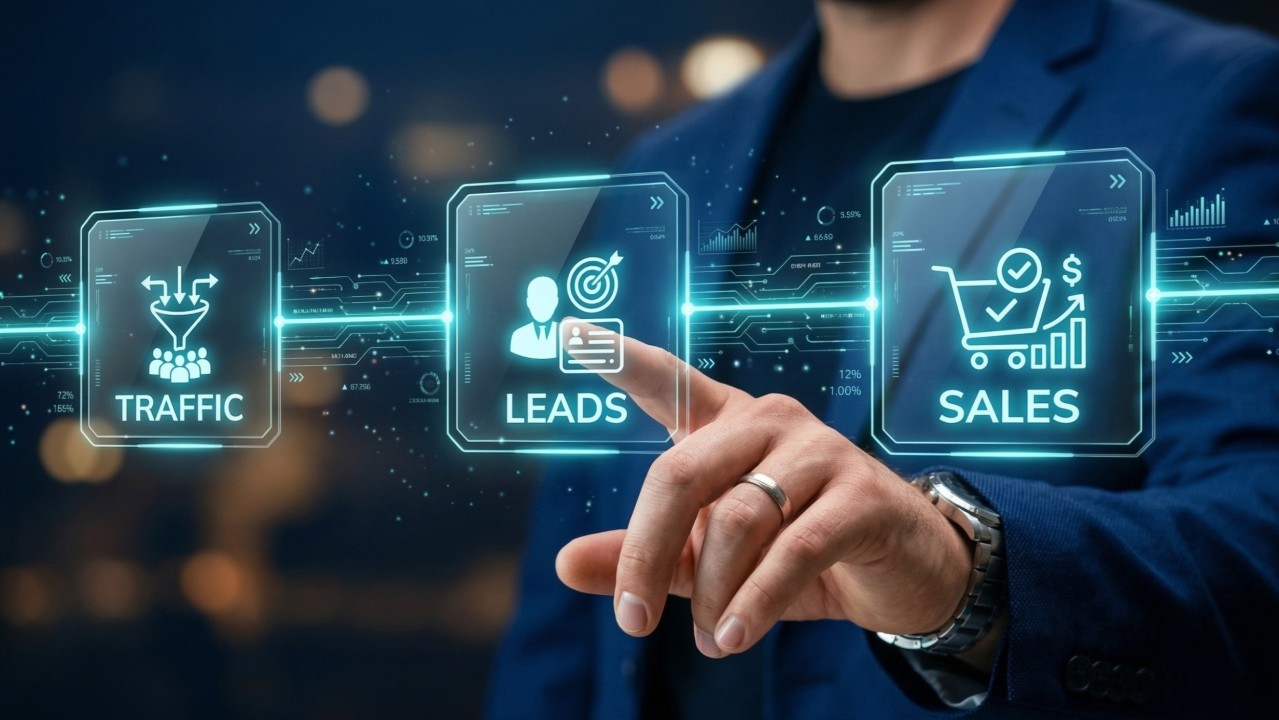
For many businesses, generating traffic is no longer the problem.
With SEO, paid advertising, social media, and email marketing all driving visitors to websites, the challenge has shifted. The real question is no longer how do we get clicks? — it’s what happens after the click?
Too often, marketing channels operate in isolation.
Paid ads generate traffic but don’t align with landing pages. Social media builds engagement but doesn’t connect to lead generation. Email campaigns drive clicks, but the user experience doesn’t support conversion.
The result is fragmented journeys and missed opportunities.
In 2026, the businesses that achieve the strongest results are those that move beyond channel-specific thinking and focus on alignment across the entire customer journey.
Because clicks alone don’t drive growth — conversions do.
The Disconnect Between Traffic and Results
It is common to see marketing strategies that perform well at the top of the funnel but underdeliver when it comes to outcomes.
This often happens because different channels are optimised independently rather than collectively.
For example:
- A paid campaign may generate high click-through rates, but the landing page may not match the message
- Social media content may build awareness, but there is no clear next step for users
- SEO content may attract traffic, but it doesn’t guide users toward action
Each channel may appear successful on its own, yet overall performance remains limited.
The issue is not traffic — it is lack of cohesion.
Thinking in Journeys, Not Channels
To improve ROI, businesses need to shift from channel-based strategies to journey-based thinking.
Customers do not experience marketing in silos.
They move between touchpoints — from a social post to a website, from an email to a product page, from a search result to a form submission.
A connected journey ensures that each step feels consistent, relevant, and purposeful.
This requires alignment in:
- messaging
- design
- timing
- intent
When these elements are aligned, users are more likely to progress toward conversion.
Aligning Messaging Across Channels
One of the most common causes of poor conversion performance is inconsistent messaging.
If a user clicks on an advert expecting one thing but lands on a page that communicates something different, trust is lost immediately.
Consistency is critical.
Messaging across channels should:
- reflect the same value proposition
- reinforce key benefits
- use similar language and tone
- guide users toward the same outcome
For example, if a campaign focuses on cost savings, that message should be clearly reinforced on the landing page and throughout the user journey.
Alignment reduces confusion and increases confidence.
The Role of Landing Pages in Conversion
Landing pages act as the bridge between traffic and action.
No matter how effective a campaign is at generating clicks, poor landing page experience will limit results.
Effective landing pages should:
- match the intent of the traffic source
- provide clear and focused messaging
- minimise distractions
- guide users toward a specific action
- load quickly and perform well across devices
When landing pages align with the expectations set by campaigns, conversion rates improve significantly.
Using Data to Connect the Journey
Data plays a crucial role in aligning marketing channels.
By analysing how users move between touchpoints, businesses can identify where journeys break down and where improvements are needed.
Key insights may include:
- which channels drive the highest-quality traffic
- where users drop off in the journey
- which content influences decision-making
- how different touchpoints contribute to conversions
These insights enable businesses to optimise not just individual channels, but the entire journey.
Integrating SEO, Paid Media, and Content
SEO, paid media, and content marketing are often treated as separate disciplines, but they are most effective when integrated.
For example:
- SEO content can support paid campaigns by providing deeper information
- paid ads can amplify high-performing organic content
- content marketing can nurture users who are not yet ready to convert
When these channels work together, they create a more cohesive experience.
This integration ensures that users receive consistent messaging regardless of how they discover the brand.
The Role of Personalisation
AI-driven personalisation is becoming increasingly important in aligning customer journeys.
By analysing user behaviour, businesses can tailor experiences across channels to match individual preferences and intent.
Personalisation can include:
- dynamic website content
- targeted email campaigns
- customised advertising messages
- tailored product recommendations
When users encounter relevant experiences at each touchpoint, they are more likely to engage and convert.
Optimising for Intent, Not Just Traffic
Not all traffic is equal.
Some users are exploring, others are comparing options, and some are ready to take action. Understanding intent is key to improving conversion rates.
Marketing strategies should align content and messaging with different stages of the journey:
- Awareness: educational content and insights
- Consideration: comparisons, case studies, and detailed information
- Decision: clear offers, pricing, and calls to action
By matching content to intent, businesses can guide users more effectively toward conversion.
Breaking Down Internal Silos
Achieving alignment across channels often requires organisational change.
Different teams may be responsible for SEO, paid media, social media, and web design. Without collaboration, strategies can become fragmented.
To create a unified approach, businesses should:
- encourage cross-team communication
- share data and insights
- align goals and KPIs
- coordinate campaign planning
When teams work together, the entire marketing ecosystem becomes more effective.
Measuring What Matters
Traditional metrics such as clicks, impressions, and engagement provide useful insights, but they do not always reflect business outcomes.
To maximise ROI, businesses should focus on metrics that reflect the full journey, such as:
- conversion rates
- cost per acquisition
- customer lifetime value
- revenue generated from campaigns
By measuring outcomes rather than activity, businesses can evaluate the effectiveness of their strategies more accurately.
Continuous Optimisation
Alignment is not a one-time process.
Customer behaviour, market conditions, and platform algorithms are constantly changing. To maintain performance, businesses must continuously refine their strategies.
This involves:
- testing different approaches
- analysing performance data
- adjusting messaging and targeting
- improving user experience
Continuous optimisation ensures that marketing efforts remain effective over time.
The Impact on ROI
When marketing channels are aligned, the impact on ROI can be significant.
Benefits include:
- higher conversion rates
- improved customer experience
- reduced wasted spend
- stronger brand consistency
- better long-term growth
Alignment ensures that every part of the marketing strategy works toward the same goal.
From Activity to Outcomes
Generating clicks is relatively easy.
Turning those clicks into meaningful outcomes requires a more strategic approach.
By aligning messaging, design, data, and intent across channels, businesses can create seamless customer journeys that guide users naturally toward conversion.
In today’s digital landscape, success is not defined by how much traffic you generate — it is defined by how effectively you convert it.