
News
Mastering Technical On-Page SEO: A Complete Guide to Boosting Your Site’s Performance
In today’s competitive digital landscape, merely creating high-quality content isn’t enough. To truly rank well in search engine results and provide users with a seamless experience, technical on-page SEO must be a cornerstone of your strategy.
Technical on-page SEO refers to the backend and structural elements of your website that impact how search engines crawl, interpret, and index your content. These technical aspects — often overlooked — can make or break your search performance. From improving site speed to implementing schema markup and enhancing accessibility, every tweak adds up to a stronger SEO foundation.
In this comprehensive guide, we delve deep into the five key pillars of technical on-page SEO, offering insights that go beyond simple checklists. Whether you’re an SEO specialist, content strategist, developer or digital marketer, understanding and applying these best practices is essential for maximising visibility, driving organic traffic, and improving user experience.
1. Core Web Vitals Optimisation: Enhancing Speed, Interactivity, and Stability
Google’s Core Web Vitals are critical metrics that reflect real-world user experience. They measure how quickly content loads, how interactive a page feels, and how stable the layout is during loading.
Let’s explore each metric in detail and what you can do to improve them:
Largest Contentful Paint (LCP)
LCP measures how long it takes for the main content of a page to load. Google recommends keeping LCP under 2.5 seconds. A sluggish LCP not only hurts rankings but can frustrate users enough to bounce.
How to Improve LCP:
- Compress and resize large images
- Use modern image formats like WebP
- Implement server-side caching
- Minimise render-blocking CSS and JavaScript
Each of these improvements helps your largest visual elements load faster, enhancing perceived speed and user satisfaction.
Interaction to Next Paint (INP)
INP evaluates the time it takes for a website to respond to a user’s interaction, such as clicking a button. Google advises that INP should remain under 200 milliseconds.
Strategies to Enhance INP:
- Minimise long JavaScript tasks
- Break up and defer non-critical scripts
- Avoid locking the main thread
Fast responsiveness not only contributes to higher engagement but also makes your site feel more professional and polished.
Cumulative Layout Shift (CLS)
CLS measures unexpected layout shifts during the loading process. A CLS score below 0.1 is considered ideal.
To Reduce CLS:
- Set width and height for all image and video elements
- Avoid inserting dynamic content above already loaded content
- Preload fonts to prevent late-stage visual shifts
A visually stable site prevents accidental clicks and delivers a smoother experience, which is especially critical for mobile users.
2. Schema Markup: Enriching Your Content for Search Engines
Schema markup is a form of structured data that helps search engines understand the context of your content. By using the appropriate schema types, you increase your chances of appearing in rich results (such as featured snippets, FAQs, and star ratings).
Choosing the Right Schema
Before implementing schema, it’s vital to select the most suitable type based on your content. Popular schema types include:
- Article for blogs and news content
- FAQ for question-answer formats
- HowTo for step-by-step guides
- Product for eCommerce pages and reviews
Each type enhances your visibility and allows your content to stand out in SERPs.
Article Schema Best Practices
At a minimum, all long-form content should use Article schema with the following properties:
- headline
- author
- datePublished
- dateModified
This not only provides search engines with essential metadata but also builds trust with users by displaying clear authorship and freshness.
Going Beyond the Basics
If your content includes specific elements, such as tutorials or Q&As, use specialised schema like HowTo or FAQ. For product reviews, implementing Product schema can display pricing, availability, and rating information directly in search listings.
Validate and Monitor Performance
Once you’ve added schema, always validate it using tools like:
- Google’s Rich Results Test
- Schema Markup Validator
Then, track how your rich results are performing using Google Search Console. Monitoring impressions, clicks, and rankings for schema-enabled pages helps you understand what’s working and where improvements can be made.
3. Internal Linking: Structuring Authority Within Your Site
Internal linking is more than just connecting related articles. Done correctly, it signals the hierarchy of your content, distributes link equity, and improves crawlability — all of which are vital for SEO success.
Conducting a Link Audit
Start by identifying orphaned pages — those with no internal links pointing to them. Use crawling tools like Screaming Frog or Sitebulb to flag pages with:
- No links in
- Too few links out
- Broken internal links
Every page should fit logically within your site’s structure and be accessible in just a few clicks from your homepage.
The Pillar-Cluster Model
To enhance topical authority and user navigation, adopt a pillar-cluster model. Here’s how it works:
- Create a pillar page on a broad topic (e.g., “SEO Basics”)
- Build cluster content targeting specific subtopics (e.g., “What is Schema Markup?” or “How to Improve LCP”)
- Interlink them in both directions to reinforce semantic relevance
This model not only helps users discover more content but also strengthens your domain’s thematic signals to Google.
Anchor Text Optimisation
Avoid using vague anchor text like “click here”. Instead, use descriptive anchors that give users (and search engines) context, ideally between 3–6 words.
For example: ✔ “Learn how to optimise CLS scores” ✖ “Click here to learn more”
Balancing Link Equity
High-priority pages (such as service or conversion-focused pages) should receive 15+ internal links. Supporting content can have fewer, depending on their strategic value. This ensures important pages benefit from the maximum possible authority.
Also, check link depth — no critical page should be buried more than three clicks from the homepage. Beyond that, your content risks being missed by crawlers and ignored by users.
4. Accessibility: Optimising for Every User
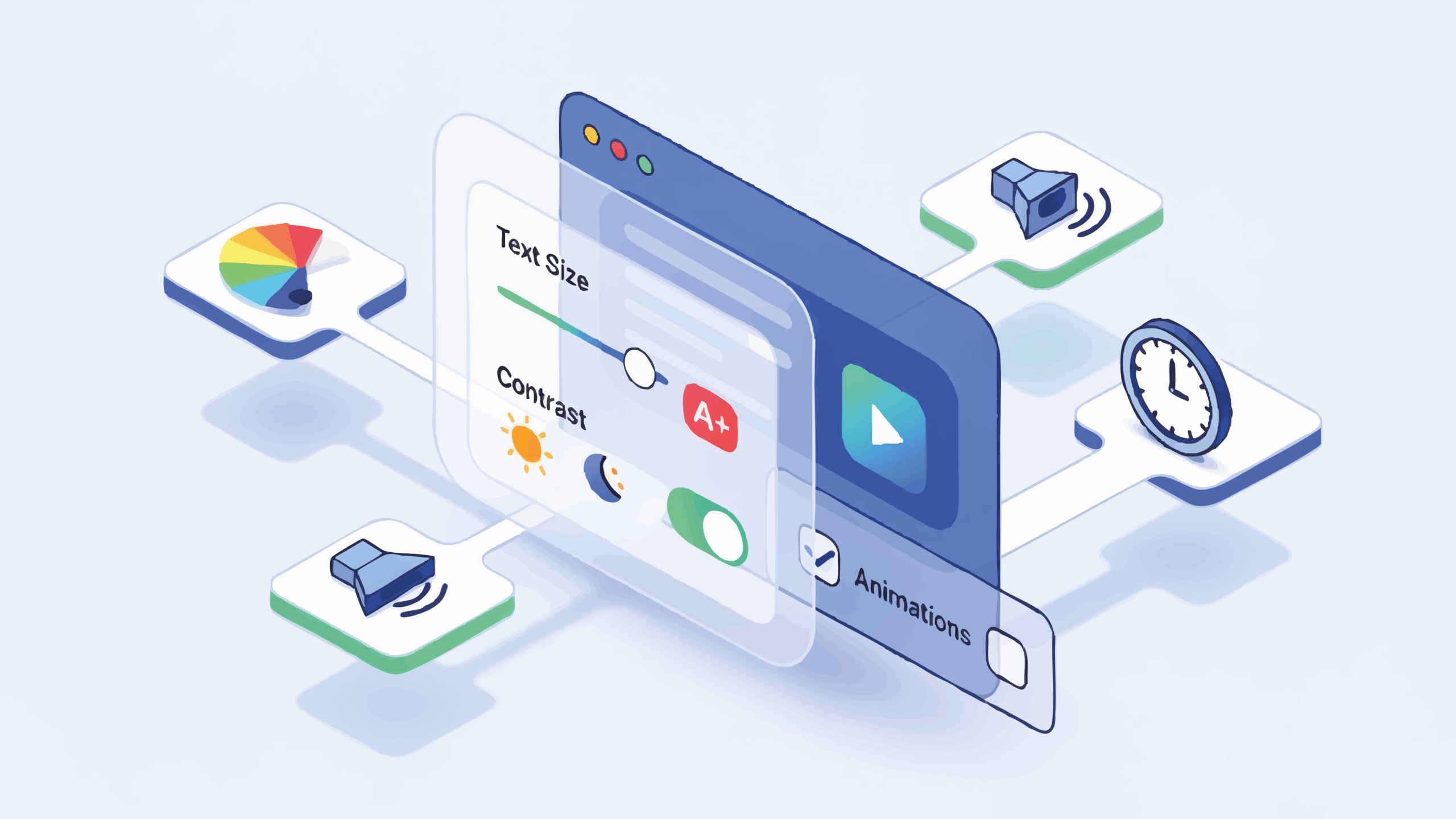
While SEO often focuses on bots, accessibility is about ensuring that all users — including those with disabilities — can access and interact with your site. Not only is this the right thing to do, but accessibility also indirectly boosts SEO by improving user engagement and reducing bounce rates.
Follow WCAG 2.2 Standards
The Web Content Accessibility Guidelines (WCAG) 2.2 lay out a framework for building inclusive websites. Key areas include:
- Alt text for all images, describing their purpose
- ARIA labels for interactive elements
- Readable fonts (at least 16px)
- Sufficient colour contrast (minimum 4.5:1 for text)
Keyboard Navigation
Many users rely on keyboards or screen readers. Ensure that:
- All buttons, menus, and forms are navigable using a keyboard
- Focus indicators are visible
- Interactive elements follow a logical tab order
By enhancing accessibility, you not only expand your audience but also send positive signals to search engines about your site’s usability.
5. Ongoing Maintenance: Staying Technically Healthy
SEO isn’t a one-time fix — it’s an ongoing discipline. Without regular check-ins, your site can slowly degrade in performance, relevance, and rankings.
Schedule Quarterly Audits
A full technical audit every three months can help uncover:
- Broken links
- Schema markup issues
- Declining Core Web Vitals scores
- Internal linking opportunities
These audits should be automated where possible and documented to identify recurring problems.
Content Refresh Calendar
Search engines reward freshness, especially for competitive keywords. Monitor content performance over time and refresh any page that sees a 20%+ decline in traffic over a three-month period.
Content updates might include:
- Rewriting outdated sections
- Adding new data or examples
- Enhancing formatting or images
- Updating metadata and schema
By keeping content current, you increase its longevity, relevance, and conversion potential.
Technical On-Page SEO is Your Foundation for Success
In many ways, technical on-page SEO is the unsung hero of digital marketing. It doesn’t always grab headlines like AI content or viral campaigns, but it silently powers your entire organic strategy.
From speeding up your site and creating schema-rich results, to linking content intelligently and maintaining accessibility — technical SEO lays the groundwork for all your content to perform at its best.
If your site is slow, unstructured, or difficult to crawl, no amount of great content will save it from poor rankings.
Start with the checklist. Build on it. Then audit, monitor, and maintain it.
Because technical excellence isn’t optional anymore — it’s expected.








The Ultimate Social Media Guide
With the ever-growing power of social media, we use the latest techniques, video, and animation software to craft eye-catching social media assets that make your brand pop. Our designers, wielding Adobe Creative tools, create distinctive animations and graphics to illuminate your brand story and highlight your products or services. Want a unique design? No problem – we also offer bespoke designs to match your brand aesthetic.