
News
The 5-Step 2025 SEO Framework: What Businesses Need to Dominate Search
The way people search — and the way search engines deliver results — has evolved dramatically. Traditional SEO remains foundational, but the rise of AI, voice search, and machine-generated overviews is transforming the landscape. Success in this new era requires a more comprehensive and strategic approach — one that goes far beyond keywords and backlinks.
That’s where the 2025 SEO Framework comes in.
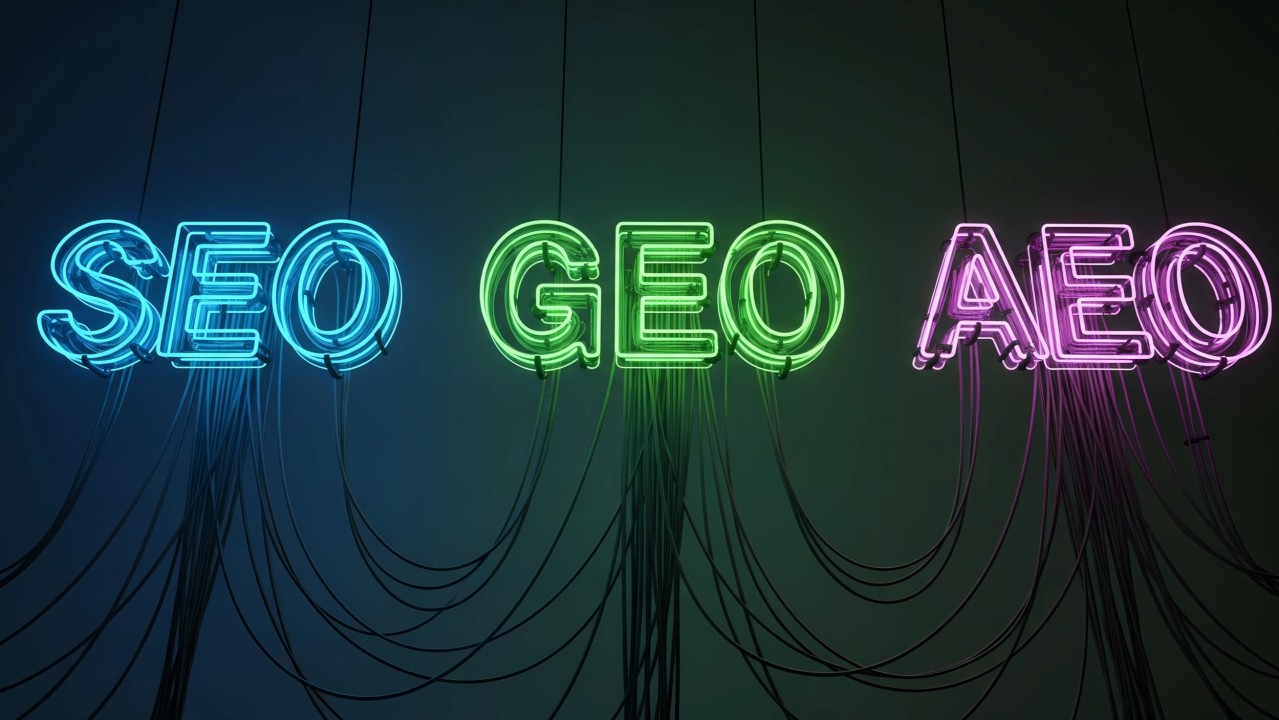
This framework outlines five critical layers of modern search dominance: SEO (Search Engine Optimisation), AEO (Answer Engine Optimisation), GEO (Generative Engine Optimisation), AIO (Artificial Intelligence Optimisation), and SXO (Search Experience Optimisation). Together, they form a cohesive strategy for brands aiming to win visibility, trust, and conversions in a search ecosystem increasingly influenced by artificial intelligence.
Let’s explore each step in depth — and uncover what your business must do to dominate search in 2025.
Step 1: SEO (Search Engine Optimisation) – Be Found
Search Engine Optimisation still plays a vital role, but the expectations have changed. Ranking in Google and other engines now requires more than just stuffing content with keywords or earning a few backlinks. SEO in 2025 is about laying a robust foundation — technically sound, topically rich, and user-focused.
At the most basic level, this means your website must be fast, mobile-friendly, and well-structured. Page speed, mobile usability, internal linking, and schema markup are essential. Without these, your content won’t even be indexed properly — let alone ranked competitively.
More importantly, you need to move from a keyword-first strategy to a topic cluster approach. This means organising your content around key themes that demonstrate subject matter authority. For instance, instead of writing isolated blog posts about solar panels, a renewable energy company would create interconnected resources covering residential, commercial, financing, maintenance, and regulatory issues.
Another key shift in 2025 is the importance of first-party authority signals. Search engines are increasingly favouring sites that own their niche — those that have built up consistent, valuable, and trustworthy content. Your backlink strategy must reflect this too. Earned links from relevant and credible sites — especially industry-specific domains — carry more weight than ever.
In short, SEO is your entry ticket. If this isn’t strong, nothing else will work. You won’t get chosen, cited, scaled, or trusted.
What businesses must do:
- Audit and improve technical SEO: speed, structure, mobile experience.
- Build topic clusters around intent, not isolated keywords.
- Earn backlinks from trusted industry sources.
- Refresh and update old content regularly.
Step 2: AEO (Answer Engine Optimisation) – Be Chosen
In 2025, simply being found isn’t enough. You need to be chosen.
AI-powered search tools — including Google’s Search Generative Experience (SGE), ChatGPT’s browsing tools, and voice assistants — are changing how users discover information. Instead of clicking through multiple results, users are presented with direct answers. That means your content must be optimised not just for visibility, but for selection.
This is where Answer Engine Optimisation (AEO) comes in.
AEO is all about structuring your content so that AI and voice engines understand and surface it in response to questions. That means focusing on concise, clear, well-structured answers — often in formats like FAQs, listicles, featured snippets, and how-to sections. The more you tailor your content to conversational queries, the more likely you are to be selected by AI assistants and answer engines.
Structured data is crucial here. Schema markups like FAQPage, HowTo, and Q&A help engines interpret your content more effectively. You also need to optimise for formats engines prefer: short paragraphs, bulleted lists, and direct definitions. These increase the chances of being featured in zero-click search results — where users get answers without visiting a webpage.
This stage is also where brand clarity matters. If your business becomes the default answer to a specific question or query type, that authority compounds over time.
What businesses must do:
- Identify the questions your audience is asking — and answer them clearly.
- Use schema markups to structure content for machines.
- Write in a style that AI models prefer: brief, factually rich, and highly scannable.
- Build credibility so AI trusts your answer as the ‘correct’ one.
Step 3: GEO (Generative Engine Optimisation) – Be Cited
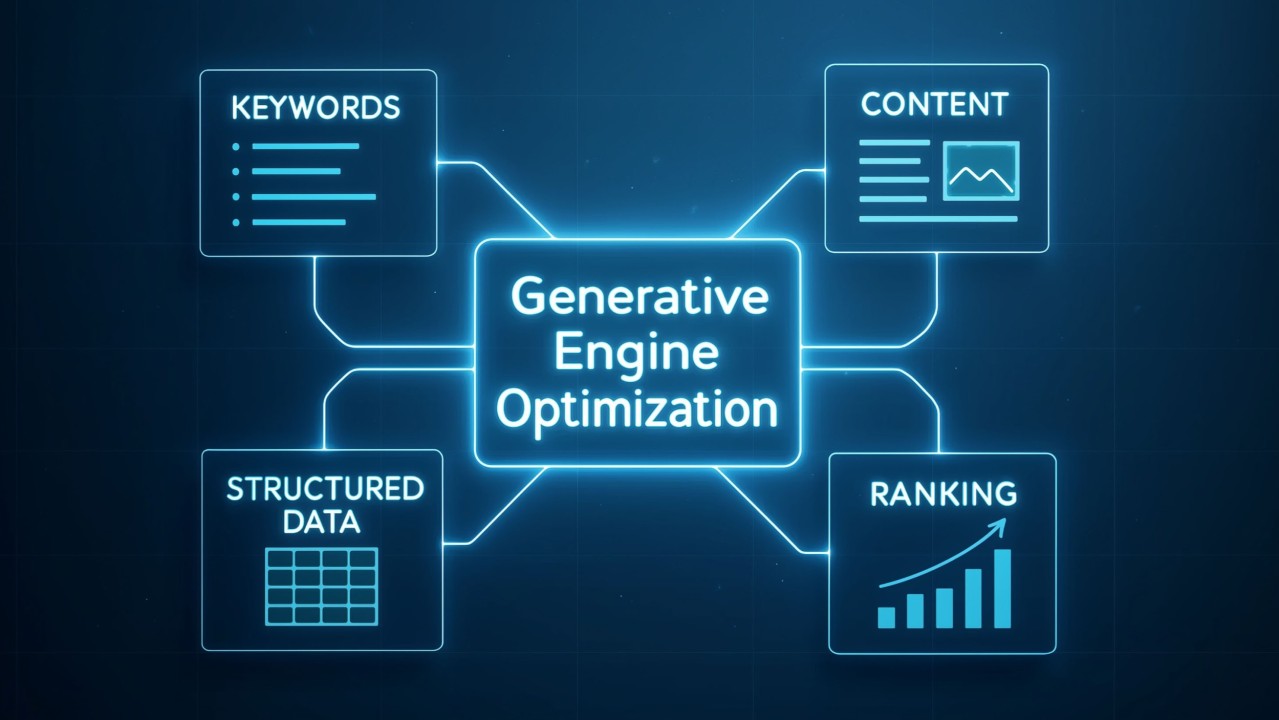
With the explosion of AI-generated search results, getting cited by language models is now a major trust and visibility signal. Generative Engine Optimisation (GEO) is all about becoming the source that these models refer to and draw from when constructing answers.
Unlike traditional SEO, which rewards backlinks, generative engines reward citations — especially those tied to original thought, data, and clearly structured insights. If your content is referenced by ChatGPT, Perplexity, Claude, or Google SGE as a trusted source, it builds both human and machine trust.
The key here is publishing original, insight-led content. This could include whitepapers, proprietary data, opinion pieces, and frameworks that cannot be easily reproduced. Think of it as digital PR for the AI age — your content should be the kind others quote.
To increase your chances of being cited, write in a way that LLMs can parse easily. Use explicit headings, bullet points (sparingly), and markdown-style formatting. Your goal is to make it as frictionless as possible for AI models to understand your arguments and reference them.
Prompt-led content also plays a role here. Think about how people use AI: they type prompts, not just keywords. If your content answers prompts like “best marketing strategy for B2B SaaS” or “top AI tools for recruitment,” you’ll be surfaced more frequently in generative responses.
What businesses must do:
- Create original content that includes data, analysis, or frameworks.
- Publish expert opinions or research with clear authorship.
- Format content for readability — especially for AI models.
- Think about prompt-answer alignment, not just keyword targeting.
Step 4: AIO (Artificial Intelligence Optimisation) – Be Scaled
Content creation is no longer a manual task — at least not entirely. In 2025, Artificial Intelligence Optimisation (AIO) is the key to scaling content efficiently without sacrificing quality.
Brands that dominate search today aren’t necessarily the most creative — they’re the most consistent and systematic. AIO enables you to plan, produce, and repurpose content at scale. AI tools can help generate outlines, refine messaging, and convert long-form articles into social posts, videos, and carousels — all from the same core topic.
This doesn’t mean relying solely on AI to write for you. Instead, AIO is about using AI tools strategically:
- Automate repetitive tasks (like summarising blog posts into newsletters).
- Use AI voice to maintain consistent brand tone across platforms.
- Repurpose cornerstone content into multiple formats (video scripts, podcast outlines, social snippets).
Cluster planning, content briefs, tone-of-voice guides, and SEO optimisation can all be AI-assisted. This ensures you’re not just producing content, but doing so in a way that serves every part of the funnel — from discovery to conversion.
AI is also integral in content performance analysis. Tools now offer real-time insights into how content is performing, allowing for quicker pivots and continual improvement.
What businesses must do:
- Use AI to plan and streamline content workflows.
- Maintain quality control — use humans to edit, guide, and validate AI outputs.
- Repurpose every asset into multiple formats and channels.
- Track engagement metrics and iterate based on data.
Step 5: SXO (Search Experience Optimisation) – Be Dominant
Winning at search in 2025 doesn’t just mean showing up — it means owning the entire experience. That’s the role of Search Experience Optimisation (SXO).
SXO is about delivering seamless, satisfying experiences from the moment a user searches, to the moment they convert — and beyond. It’s not just about the SERP. It’s about what happens after the click.
If a user lands on your site and bounces immediately, that sends a powerful negative signal to engines. On the other hand, if your page delivers fast loading, clear structure, intuitive navigation, and content that satisfies intent — it builds trust and boosts rankings.
This is where micro-influencers, personalisation, and trust signals matter deeply. Content that feels human and tailored tends to outperform generic copy. First-hand experience, user-generated reviews, visual walkthroughs, and interactive tools all enhance search satisfaction.
SXO also involves multi-channel alignment. If someone discovers your brand via search, visits your website, signs up to your email list, and then sees your brand again on social — they’re more likely to convert. The best-performing brands push traffic into owned ecosystems like newsletters, communities, and CRM platforms.
In short, SXO is about the long game. It’s where all the other steps converge: being found, chosen, cited, and scaled. The brands that do this well don’t just win traffic — they win loyalty.
What businesses must do:
- Optimise user experience: clear CTAs, fast loading, mobile design.
- Align search content with on-page and post-click journeys.
- Create trust-building assets: testimonials, case studies, human-led content.
- Funnel users into owned channels (newsletters, SMS, apps).
Final Thoughts
The 2025 SEO Framework is not a checklist – it’s a mindset.
The landscape of search is shifting from static pages and keyword tricks to a dynamic, AI-driven ecosystem. Brands that dominate this new world will do so by understanding how machines and humans interpret, share, and act on information.
To recap:
- SEO ensures you’re in the game.
- AEO makes you the answer.
- GEO helps you get cited and trusted by machines.
- AIO allows you to scale without burnout.
- SXO ensures you win not just clicks — but loyalty.
Together, these five layers offer a blueprint for real visibility in a world where AI, voice search, and user expectations are reshaping how we find and trust information.
For brands willing to adapt, the opportunity is massive.
The question is — will you be visible, or invisible?












The Ultimate Social Media Guide
With the ever-growing power of social media, we use the latest techniques, video, and animation software to craft eye-catching social media assets that make your brand pop. Our designers, wielding Adobe Creative tools, create distinctive animations and graphics to illuminate your brand story and highlight your products or services. Want a unique design? No problem – we also offer bespoke designs to match your brand aesthetic.