News
When Should a Business Rebrand? 7 Signs It Is Time for a New Identity
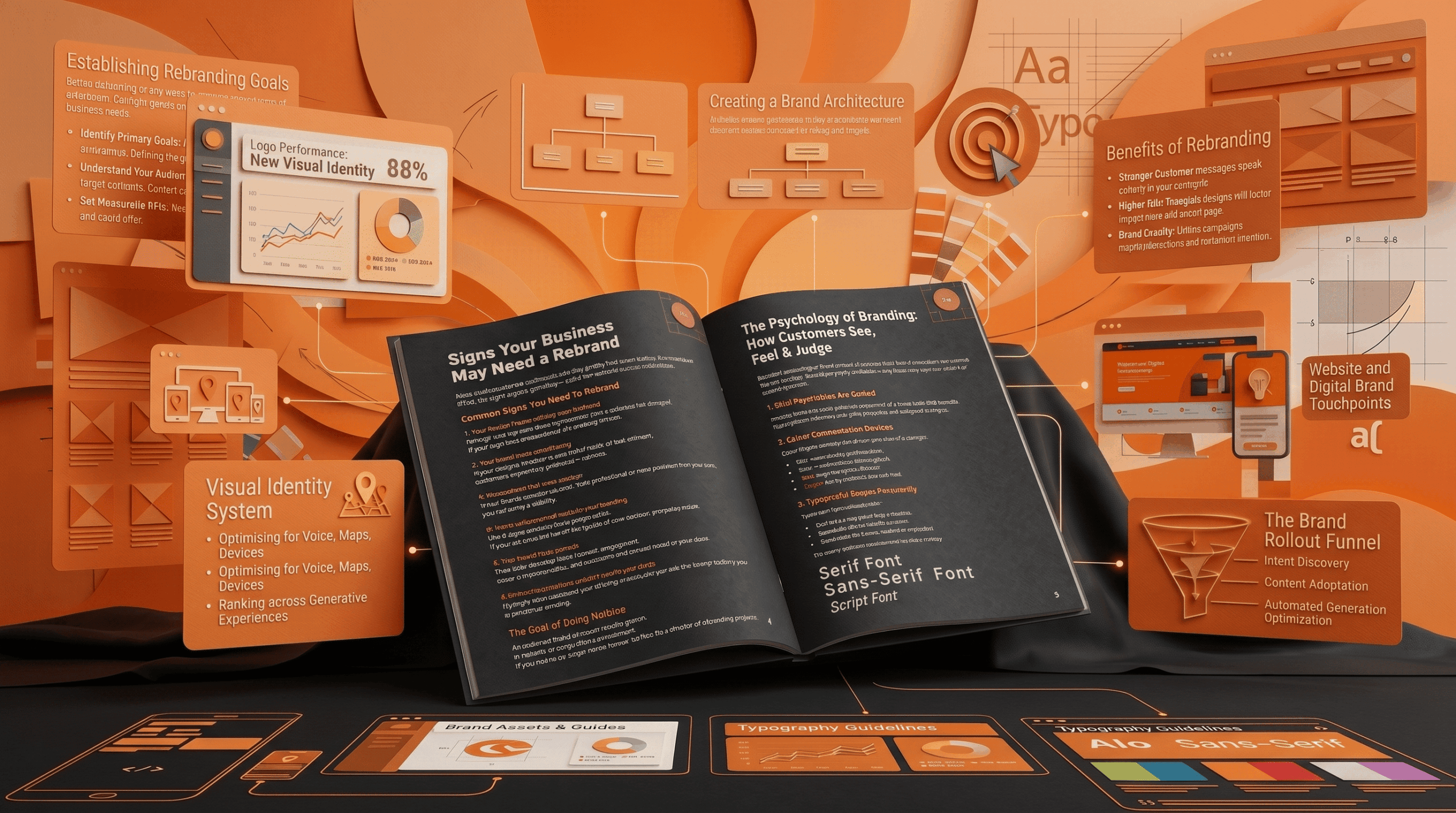
How to recognise when your brand no longer represents your business—and why a successful rebrand involves much more than designing a new logo
Businesses change. They introduce new services, enter different markets, attract larger customers, develop new technology, recruit new people and gradually become organisations that may look very different from the companies they were when their original brand identities were created.
Brands do not always evolve at the same speed.
A logo designed when a company employed five people may still be representing it when it employs fifty. A website written for one particular service might remain in place long after the organisation has expanded into several markets. Messaging created around a start-up proposition can continue being used even though the business has developed into an established organisation working with national or international customers.
Eventually, a gap can develop between what the business actually is and what its brand communicates.
That is often when conversations about rebranding begin.
However, deciding to rebrand should not be taken lightly. A successful brand builds recognition and trust over time, and replacing familiar elements simply because they feel slightly old can discard valuable brand equity. Equally, holding onto an identity that no longer represents the organisation can make marketing less effective, weaken customer perception and restrict future growth.
The important question is therefore not simply, “Do we need a new logo?” It is, “Does our existing identity still accurately communicate who we are, what we offer and where the business is going?”
If the answer is increasingly no, it may be time to consider a rebrand.
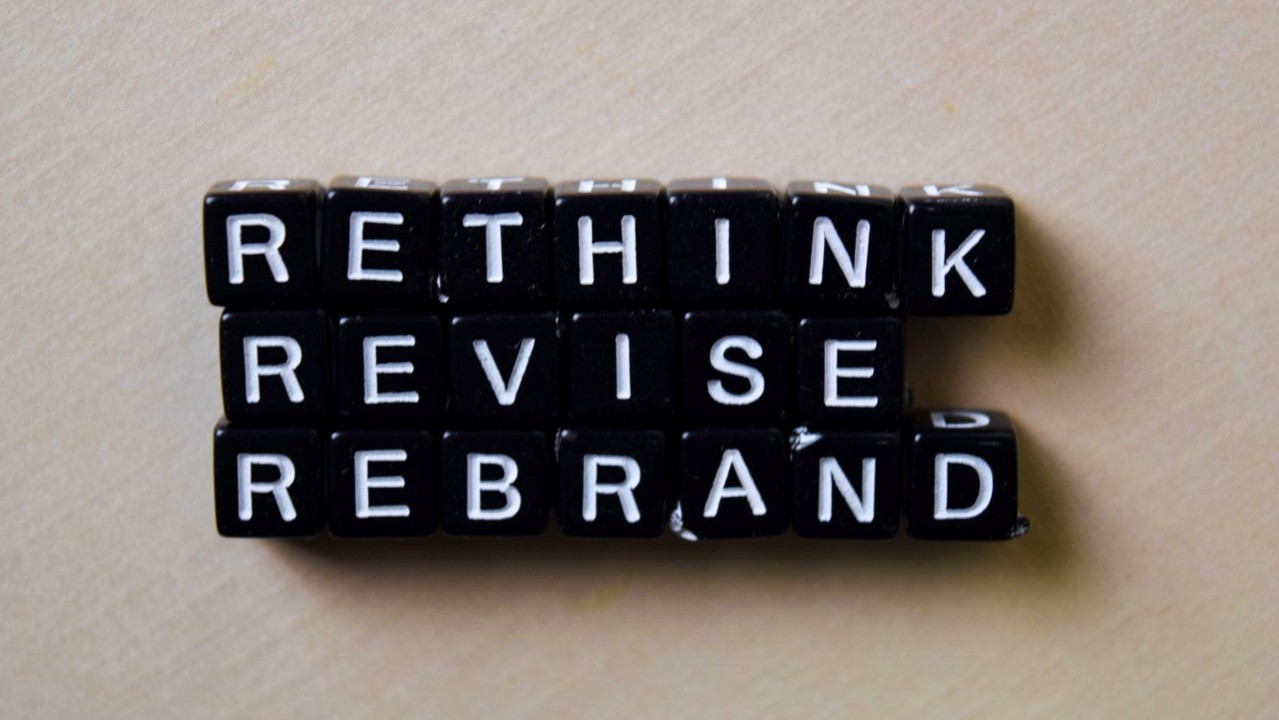
Rebranding is much more than changing a logo
One of the biggest misconceptions about rebranding is that it primarily involves replacing a logo, choosing some new colours and updating the company stationery.
Those things may form part of the process, but they are the visible expression of a much bigger strategic decision.
A brand includes how an organisation positions itself, the audiences it wants to reach, the messages it communicates, the personality it presents and the experience customers have when interacting with it. The visual identity translates those ideas into recognisable creative elements such as logos, typography, colours, photography, graphics and design systems.
A meaningful rebrand therefore starts with understanding the business rather than immediately opening design software.
What has changed? Who are the customers today? Which customers does the organisation want tomorrow? What does the company want to be known for? How should it be different from competitors? What aspects of the existing identity remain valuable?
Only once those questions have been answered should the visual identity begin to evolve.
Without that strategic foundation, businesses risk replacing an old logo with a newer logo while leaving the underlying brand problems completely untouched.
Rebrand, refresh or reposition?
Before deciding upon a complete rebrand, businesses should determine how much change is actually required.
Sometimes the underlying brand remains strong but the visual execution has become dated. In that situation, a brand refresh may be sufficient. The existing logo might be refined, typography modernised, colours updated and a stronger digital design system introduced while retaining recognisable elements of the established identity.
In other situations, the problem is primarily strategic. The organisation may need to reposition itself around a different market, proposition or audience without necessarily abandoning its entire visual identity.
A full rebrand becomes more appropriate when both the strategic positioning and the creative expression of the business need significant change.
The distinction matters because unnecessary change can create cost and confusion. Businesses should preserve valuable brand equity wherever it continues to support the organisation.
The objective is not to make everything different.
It is to make the brand more accurate, distinctive and effective.
1: Your brand no longer reflects the business you have become
Perhaps the clearest reason to consider rebranding is that the business has fundamentally changed since the existing identity was created.
This happens frequently in successful organisations.
A company might begin by providing one specialist service and gradually expand into a much broader offering. A regional supplier may become a national organisation. A traditional service business might evolve into a technology-led company, while an organisation originally serving small businesses could increasingly work with enterprise customers.
The brand can eventually become anchored to an earlier version of the company.
This creates a communication problem. Potential customers form impressions quickly, and if the brand suggests a smaller, narrower or different organisation from the one that actually exists, the business has to overcome that perception before it can communicate its real capabilities.
The problem can appear within the company name, visual identity, website, messaging or all of them simultaneously.
Imagine a company that started fifteen years ago providing basic IT support to local businesses. It now delivers cybersecurity, cloud infrastructure, digital transformation and managed technology services to national organisations, yet its branding still resembles a small computer repair business.
The underlying company may have evolved considerably, but customers cannot see that evolution.
A rebrand can bring external perception back into alignment with internal reality.
2: Your visual identity looks noticeably dated
Design trends change, but businesses should be cautious about rebranding every time a particular style becomes fashionable.
Strong identities often remain effective for decades precisely because they are distinctive rather than trend-driven.
However, there is a difference between an established identity and one that simply feels outdated.
Logos created many years ago may contain complicated gradients, excessive detail or typography that performs poorly across modern digital environments. Colour systems designed primarily for print may not work effectively on websites, apps or social media. Brand guidelines might contain no consideration for animation, video, mobile interfaces or digital accessibility.
The result is not merely an aesthetic problem.
Customers can subconsciously associate dated branding with the organisation itself. If the identity looks as though it has not changed for twenty years, people may wonder whether the company’s services, technology or thinking have evolved either.
This becomes particularly important when competitors have invested heavily in their own brands.
A business may provide a superior service but appear less credible simply because its visual identity communicates an older or less sophisticated organisation.
The solution does not always require abandoning everything familiar. Often, the strongest redesigns preserve recognisable brand elements while making them considerably more appropriate for modern communication.
3: You are struggling to explain what your business does
A strong brand should make an organisation easier to understand.
If customers regularly misunderstand the company, assume it provides different services or fail to recognise the breadth of its expertise, there may be a positioning problem.
This frequently happens as businesses expand.
New services are added gradually, acquisitions introduce additional capabilities and different departments begin communicating in slightly different ways. Eventually, the organisation has several competing descriptions of what it actually does.
The homepage says one thing. Sales presentations say another. LinkedIn profiles use different terminology. Individual teams describe the company according to whichever service they happen to provide.
The result is fragmentation.
Rebranding creates an opportunity to simplify that complexity.
The process can define a clearer central proposition that connects different services under one coherent idea. Messaging can then be developed around customer problems, business outcomes and areas of expertise rather than simply producing a longer list of capabilities.
This clarity benefits customers, but it also helps employees.
If everyone inside the organisation can explain what the business does and why it matters in a consistent way, marketing becomes considerably stronger.
4: You want to attract a different type of customer
Businesses sometimes reach a stage where future growth depends upon attracting customers who are significantly different from those they historically served.
A company that built its reputation among small businesses might want to move into larger corporate accounts. A manufacturer may want to enter new sectors. A professional services company could decide to target international organisations, while a consumer brand might want to appeal to a younger demographic.
The existing brand may not be wrong, but it may not communicate the level of credibility, personality or relevance required by the new audience.
This can create a difficult situation where the business has the operational capability to serve larger or different customers but its brand still positions it within its historical market.
A rebrand can help support that transition.
However, businesses need to be careful not to alienate existing customers while chasing new ones. Growth does not always require abandoning the people who helped build the organisation.
The strongest repositioning often expands the brand rather than rejecting its history. It communicates greater capability and ambition while retaining the values that existing customers already trust.
5: Your brand is inconsistent across different channels
Inconsistency is one of the most common signs that a brand has lost control of its identity.
The website uses one visual style. Social media uses another. Sales presentations contain several versions of the logo. Different offices have created their own materials, while email signatures, brochures and exhibition graphics all look slightly different.
Over time, these inconsistencies accumulate.
They often appear because the existing brand system is too limited. Perhaps the original guidelines contained little more than a logo, two colours and a font. As the organisation expanded into social media, video, digital advertising, presentations, events and new website formats, employees had to improvise.
A modern brand identity needs to operate as a system.
It should explain how the organisation communicates across websites, social platforms, photography, video, animation, documents, presentations, print and physical environments.
The objective is not rigid uniformity. Different formats naturally require different creative treatments.
The important thing is recognisability.
A customer should be able to encounter a LinkedIn post, visit the website, receive a proposal and see the company’s exhibition stand while feeling that every touchpoint clearly belongs to the same organisation.
When that consistency has disappeared, a rebrand can provide the opportunity to rebuild the system properly.
6: Your competitors are becoming more distinctive while you are becoming less memorable
Rebranding should never be driven purely by copying competitors.
However, businesses do need to understand the visual and strategic environment in which their brand operates.
Markets evolve. New competitors enter, established organisations modernise and customer expectations change. A brand that once looked distinctive can gradually become almost indistinguishable from everyone else.
This is particularly common within sectors where businesses use similar colours, imagery and language.
Technology companies talk about innovation. Professional services organisations emphasise trust. Manufacturers focus on quality. Marketing agencies promise creativity and results.
When every organisation communicates using the same words and similar visual styles, customers struggle to remember any of them.
A rebrand provides an opportunity to reconsider what genuinely differentiates the business.
That difference may come from expertise, service model, culture, history, technology, people, methodology or a particular philosophy towards solving customer problems.
The visual identity can then amplify that distinction rather than simply making the company look contemporary.
Being modern is useful.
Being memorable is considerably more valuable.
7: Your brand is becoming a barrier to future growth
The most important reason to rebrand is not necessarily that something looks wrong today. It may be that the existing identity cannot support where the organisation wants to go tomorrow.
Leadership teams should consider the next three, five or even ten years.
Will the business enter new markets? Launch new products? Acquire companies? Expand internationally? Recruit significantly more people? Develop a different commercial model?
If the existing brand becomes increasingly restrictive as those plans develop, rebranding before the transition may make strategic sense.
For example, a highly location-specific company name may become problematic when expanding nationally. A brand centred around one product may limit perceptions as the portfolio expands. An identity aimed at one industry may become unsuitable when the organisation begins serving several sectors.
The challenge is recognising these limitations before they become urgent.
Rebranding under pressure because the existing identity suddenly prevents a major launch or expansion is considerably harder than evolving the brand as part of a planned growth strategy.
A strong brand should create room for the business to grow into.
Sometimes the company name itself needs to change
One of the biggest decisions within a rebrand is whether the company name should remain.
In many cases, it should.
Established names contain valuable recognition, reputation and search equity. Changing them unnecessarily can create confusion and require considerable communication.
However, there are situations where a name genuinely restricts the organisation.
It may reference a product the company no longer specialises in, a location that no longer represents its market or terminology that has become outdated. Mergers and acquisitions can also create naming challenges when multiple established identities need to be brought together.
Changing a company name should therefore be considered strategically rather than creatively.
Businesses need to evaluate customer recognition, digital assets, domain names, trademarks, legal implications, search visibility and the practical cost of updating materials.
A clever new name is not automatically a better brand.
The new identity needs to create enough strategic value to justify abandoning the equity contained within the old one.
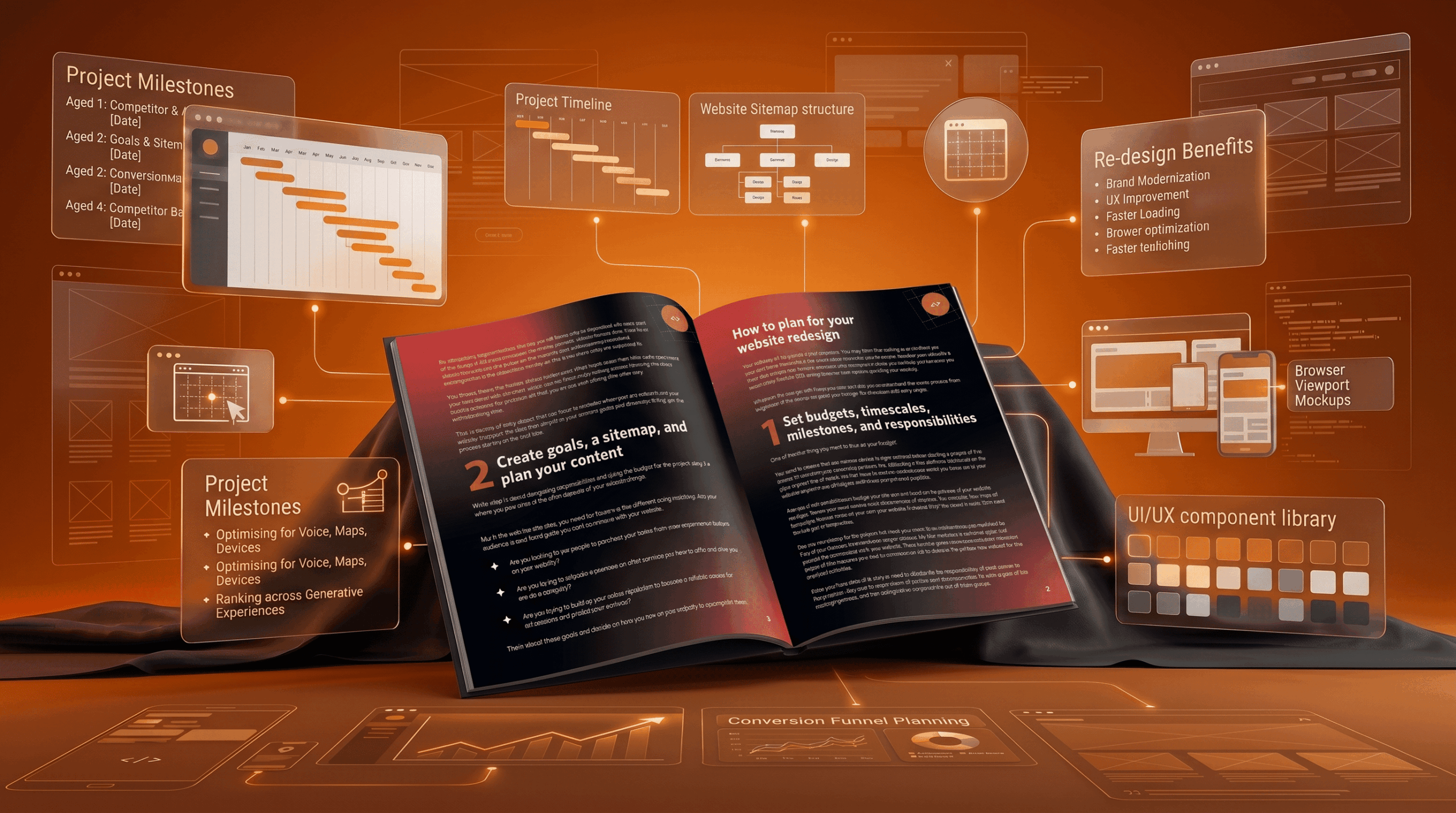
Your website often reveals branding problems first
The website is frequently where weaknesses within an existing brand become most visible.
A business might attempt to redesign its website only to discover that the brand does not provide enough creative flexibility. There may be no appropriate photography style, digital typography system, iconography or graphical language to build a modern online experience.
The website project then becomes difficult because designers are effectively being asked to create a new brand without officially changing the brand.
This is why website redesign and rebranding projects are often closely connected.
If the business has fundamentally changed, simply placing the old identity inside a new website may solve only part of the problem.
Equally, businesses should avoid rebranding solely because they want a new website. If the existing identity remains strong, it can often be evolved successfully within a new digital environment.
The correct approach depends upon whether the problem sits with the website, the brand or both.
Social media has changed what brands need to do
Modern brands operate in far more environments than they did twenty years ago.
A logo needs to work as a tiny social media avatar as well as on a large exhibition stand. Brand elements need to function in vertical videos, square graphics, carousels, animations, presentations and mobile websites.
This places different demands upon identity systems.
Businesses increasingly need flexible graphical elements that allow content to remain recognisable even when the full logo is not prominent. Typography, photography, motion, illustration and tone of voice all contribute towards that recognition.
A modern rebrand should therefore be designed around the channels customers actually use rather than simply producing a traditional set of stationery examples.
The identity needs to move.
It needs to work in video.
It needs to survive being viewed on a phone.
And it needs to remain recognisable across hundreds of individual pieces of digital content.
Rebranding can improve recruitment as well as marketing
Branding is not only about attracting customers.
Potential employees also research organisations before deciding whether to apply for jobs or accept offers.
They visit websites, look at social media, read employee content and form impressions about the company’s culture and ambitions.
An outdated brand can create the impression of an outdated organisation even when the reality is completely different.
This can be particularly important in competitive recruitment markets where talented candidates have multiple options.
A strong rebrand can help communicate the personality and ambition of the business more accurately, giving potential employees a better understanding of what the organisation represents.
Employer branding does not mean making the company look artificially exciting. It means ensuring the external identity reflects the actual experience and values of working there.
When recruitment and customer branding tell the same authentic story, the overall organisation becomes considerably stronger.
A rebrand can create internal alignment
One of the less visible benefits of a rebrand is the conversation it creates inside the business.
The process forces leadership teams to discuss fundamental questions that may otherwise remain unresolved.
What are we trying to become? Which markets matter most? What do we want customers to think about us? What makes us different? Which parts of our history should we preserve?
These conversations can expose differences between departments and leadership teams.
That is useful.
Resolving those differences creates a stronger strategic foundation for marketing, sales and customer experience.
A successful rebrand can therefore become an internal alignment exercise as much as an external creative project.
Employees understand the direction of the organisation more clearly and gain a common language for communicating it.
Don’t rebrand simply because you are bored
People inside a business see its branding every day.
Customers do not.
This creates a natural temptation to assume that an identity has become tired simply because internal teams are tired of looking at it.
That is not necessarily a good reason to change.
Recognition takes time to build. Familiar colours, logos and visual elements can hold significant value precisely because customers have seen them repeatedly.
Businesses should therefore distinguish between internal boredom and genuine strategic weakness.
If customers still recognise the identity, it accurately represents the organisation and it works effectively across modern channels, a complete rebrand may create more disruption than benefit.
A refresh or improved campaign creative may be enough to introduce new energy without discarding valuable equity.
Change should solve a problem.
It should not simply create novelty.
Don’t rebrand to disguise a deeper business problem
A new identity cannot fix a weak product, poor customer service or unclear commercial strategy.
Rebranding can change perception, but eventually customer experience determines whether that perception is deserved.
If an organisation has significant reputation problems, simply replacing the logo without addressing the underlying causes can even create cynicism.
The same applies to businesses struggling with growth.
A new visual identity might support stronger marketing, but it cannot compensate for an offer customers do not want or a sales process that does not work.
Brand strategy needs to be connected with business strategy.
The strongest rebrands happen when the organisation itself is ready to support the promises the new identity communicates.
Protect the brand equity you already have
Rebranding should not automatically mean deleting everything associated with the past.
Established businesses may have spent decades building recognition around particular colours, symbols, names or messages.
Those elements can hold enormous value.
Before changing them, businesses should understand what customers actually recognise and associate with the organisation.
Research can help identify which parts of the brand are distinctive and which are simply historical baggage.
Some of the world’s strongest brand evolutions work because they modernise familiar assets rather than abandoning them.
The objective is to move the brand forward without unnecessarily starting again from zero.
Evolution can sometimes be considerably more powerful than revolution.
Think about SEO and digital visibility before changing names or domains
Rebranding has important digital implications that should be considered early.
If the business changes its company name, domain name or website structure, careful planning is required to protect existing search visibility.
Established websites may have years of authority, backlinks and search rankings associated with their existing URLs. Moving to a new domain without an appropriate migration strategy can put some of that value at risk.
Redirects need to be planned, important content needs to be preserved and business profiles across search engines, social platforms and directories need to be updated.
Brand searches can also change over time as customers gradually adopt the new identity.
SEO should therefore be part of the rebranding process rather than something considered after the new website has already launched.
The creative excitement of a new identity should not result in valuable digital assets being accidentally discarded.
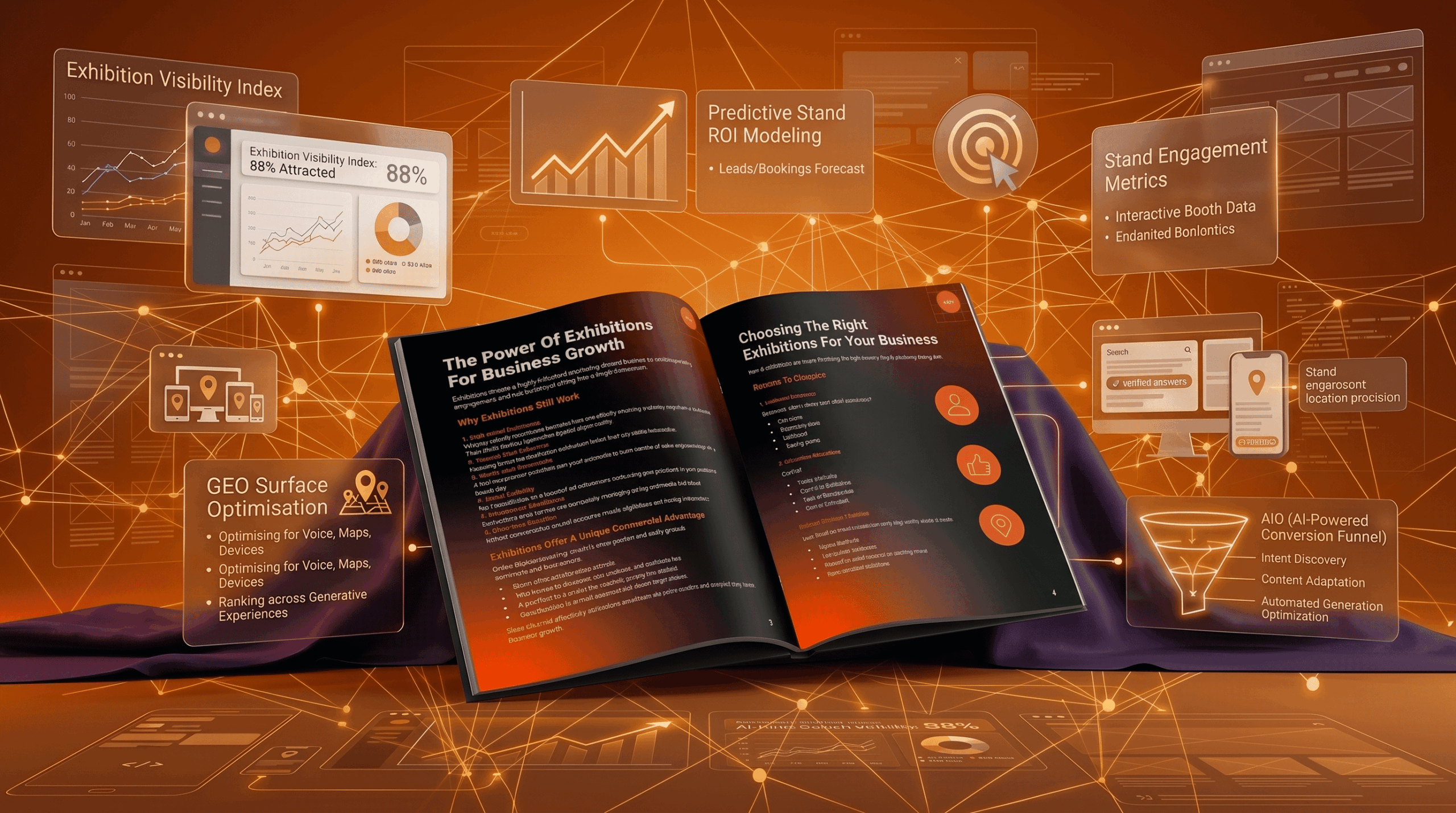
Consider AI search and digital identity
As AI-powered search becomes a larger part of customer research, having a clear and consistent digital identity is becoming even more important.
AI systems attempt to understand relationships between organisations, people, services, products and areas of expertise using information available across multiple digital sources.
A confusing rebrand can temporarily complicate those relationships if the organisation suddenly appears under a different identity without clear connections to its history.
Businesses should therefore make the transition explicit.
Websites, profiles, company information, press coverage and relevant external references should consistently communicate the new identity and its relationship with the previous brand where appropriate.
This is not only useful for AI systems.
Customers need the same reassurance.
A well-managed rebrand makes continuity obvious while communicating change.
How should a rebranding project begin?
The strongest rebranding projects begin with discovery rather than design.
Businesses should examine their existing identity, customers, competitors, commercial objectives and future strategy before making creative decisions.
Stakeholder interviews can help identify how different parts of the organisation perceive the brand. Customer research may reveal strengths the business undervalues or weaknesses internal teams have overlooked.
Competitor analysis can show where the market has become visually or verbally repetitive.
This information can then be used to develop positioning, messaging and creative direction.
Only once the strategic foundation is clear should detailed visual identity work begin.
This approach may take longer than asking a designer to produce several new logo options, but the outcome is considerably more likely to remain relevant as the organisation evolves.
Build a complete brand system, not simply a logo
A modern identity needs enough depth to support the organisation across every relevant channel.
The logo remains important, but it is only one component.
Businesses should consider typography, colour systems, imagery, photography, illustration, iconography, graphic devices, layout principles, motion and tone of voice.
Clear guidelines help internal teams and external partners use these elements consistently.
Templates can also make the identity easier to implement across presentations, social media, documents and marketing materials.
This creates a scalable brand system.
Instead of every new piece of content requiring a completely new design decision, teams have a framework that allows them to create varied material while maintaining recognisability.
That consistency is where much of the long-term value of branding emerges.
Plan the launch as carefully as the identity
Creating the new brand is only half the project.
Businesses also need to introduce it effectively.
Websites, social media accounts, email signatures, presentations, sales documents, signage, advertising, stationery and internal materials may all require updating.
Larger organisations may need a phased implementation because replacing every physical asset immediately would be unnecessarily expensive.
Communication is equally important.
Customers should understand why the brand has changed and, where appropriate, what remains the same. A rebrand can become an opportunity to tell the story of how the organisation has evolved and where it is going next.
Employees should ideally understand the new brand before customers encounter it. They need to know not only how it looks but what it represents.
The launch should therefore be treated as a coordinated business change rather than simply uploading a new logo on Monday morning.
How do you measure whether a rebrand has worked?
Branding can be more difficult to measure than a short-term advertising campaign because many of its benefits develop gradually.
Businesses can nevertheless evaluate several indicators.
Brand awareness, direct website traffic, branded searches, social engagement, customer feedback, enquiry quality and recruitment performance may all provide useful signals.
Sales teams can report whether customers understand the proposition more easily. Marketing teams can assess whether the new identity improves campaign consistency and creative flexibility. Employees can provide feedback on whether the brand better represents the organisation they work for.
Commercial results remain important, but businesses should avoid expecting every benefit to appear immediately.
A strong brand is a long-term asset.
Its value grows through repeated exposure, consistent customer experiences and the reputation built around it.
Rebrand When the Business Has Outgrown the Brand
A business should not rebrand simply because its logo is several years old or because somebody in the leadership team wants something different.
It should rebrand when there is a meaningful gap between the organisation it has become and the identity customers currently see.
That gap may appear because the business has grown, entered new markets, expanded its services or changed its strategic direction. It might become visible because the identity feels dated, messaging has become inconsistent or competitors are becoming considerably more distinctive.
In other cases, the most important warning sign is the future. The existing brand may work adequately today but become increasingly restrictive as the organisation attempts to grow.
The seven signs are ultimately connected by one question:
If the answer is yes, protect the equity you have built and continue strengthening it.
If the answer is partly, a strategic refresh may be enough.
But if the answer is increasingly no, rebranding can become far more than a creative exercise. It can provide an opportunity to clarify positioning, reconnect the organisation around a common purpose, communicate its evolution and build an identity capable of supporting the next stage of growth.
They make it easier for customers, employees and the wider market to understand what the organisation has become—and where it intends to go next.
Scott Jones is the CEO of a full service, leading and award winning SEO & Digital Marketing Agency. 123 Internet® – Digital Marketing Growth Agency support a local, national and international client base with AI-led digital marketing strategy, web design and e-commerce, creative branding, design and print, social media, lead generation, SEO/PPC, AI Search Optimisation and videography focused on ROI.
For more information about our services or advice on how to improve your online marketing activities please reach out and connect with us via our website or our social media channels.