News
From Search Engines to Answer Engines: How Businesses Should Adapt Their SEO Strategy
Why AEO, GEO, and AI-driven search are reshaping visibility – and how brands can ensure their content is cited in AI-generated answers
For more than two decades, search engine optimisation has revolved around a familiar goal: ranking highly in search engine results pages.
Businesses optimised websites with keywords, built backlinks to strengthen authority, and measured success through traffic and click-through rates. While this approach remains relevant, the landscape of digital discovery is undergoing a profound transformation.
Search engines are evolving into answer engines.
Instead of presenting users with a list of links, modern search platforms increasingly generate direct responses. AI-powered search tools summarise information, answer questions conversationally, and provide contextual insights without requiring users to click through multiple websites.
This shift fundamentally changes the role of SEO.
Today, visibility is no longer determined solely by ranking position. Instead, it depends on whether AI systems recognise your content as trustworthy enough to cite, summarise, and reference in their responses.
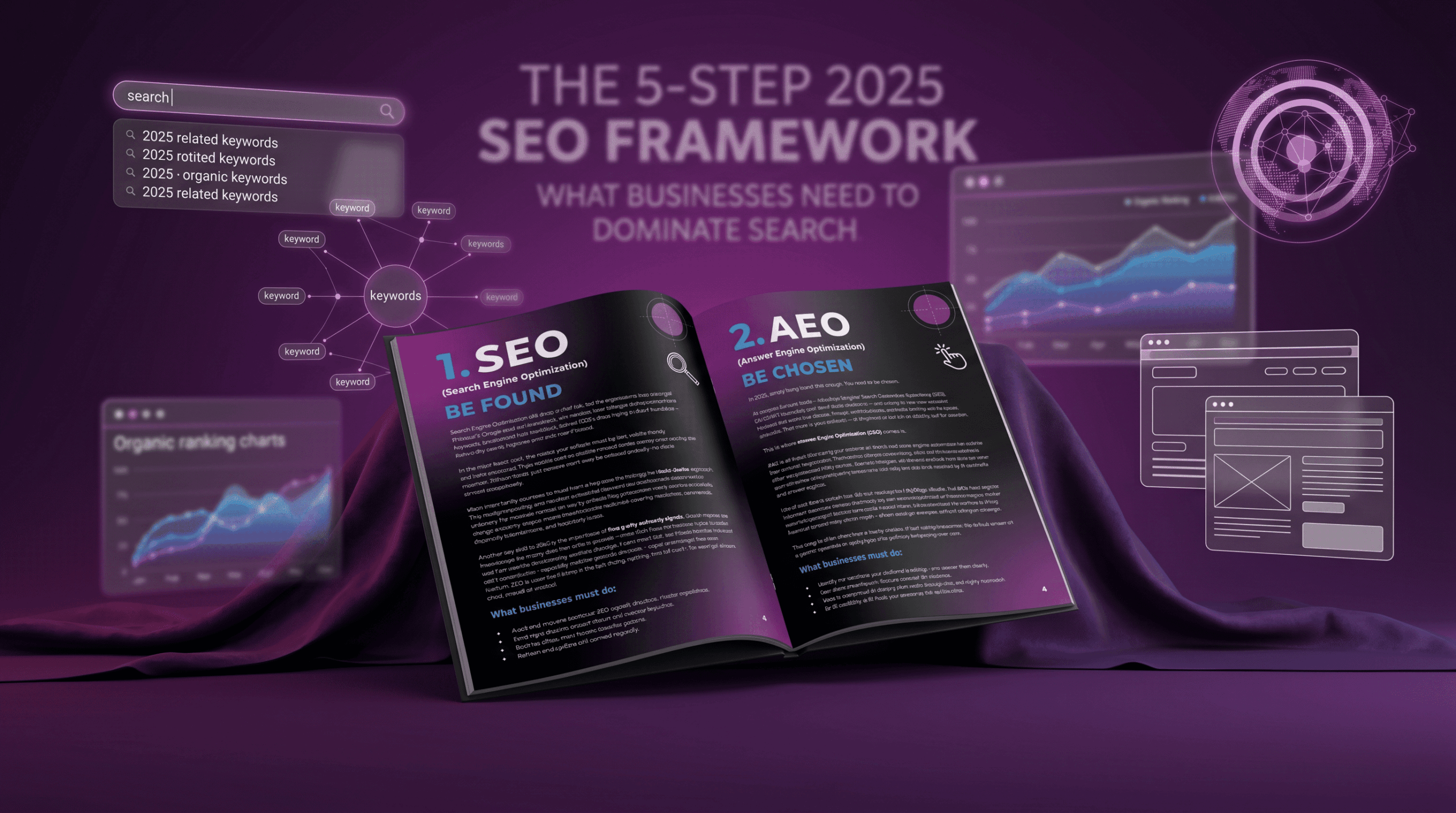
To remain competitive in this new environment, businesses must expand their SEO strategy to include Answer Engine Optimisation (AEO) and Generative Engine Optimisation (GEO) alongside traditional SEO.
Understanding the Rise of Answer Engines
The way people search online has evolved significantly.
Users increasingly ask questions in natural language rather than typing short keyword phrases. Voice assistants, conversational AI tools, and generative search experiences encourage longer, more contextual queries.
Instead of searching for:
“best digital marketing agency UK”
A user might ask:
“Which digital marketing agencies help small businesses grow online?”
AI systems analyse the intent behind such questions and generate summaries drawn from multiple sources.
These responses may include:
- AI-generated overviews in search engines
- Voice assistant responses
- Conversational AI answers
- Featured snippets and quick answers
In many cases, users receive the information they need without visiting a website at all.
This phenomenon is often described as zero-click search, and it is becoming increasingly common as AI capabilities expand.
Why Ranking Alone Is No Longer Enough
In the traditional SEO model, ranking in the top positions of search results dramatically increased traffic.
However, when AI systems summarise answers directly within search interfaces, ranking becomes only one part of visibility.
Content must now meet additional criteria:
- It must be clear enough for AI systems to interpret accurately
- It must demonstrate credibility and authority
- It must provide structured information that can be extracted easily
When these conditions are met, your content may be cited in AI summaries even if users do not immediately click through to your website.
This creates a new form of digital influence — one where visibility is measured not just in clicks, but in citations and references within AI-generated answers.
What Is Answer Engine Optimisation (AEO)?
Answer Engine Optimisation focuses on structuring content so it can be extracted easily and used directly in AI responses.
Unlike traditional SEO, which prioritises ranking pages, AEO prioritises answering questions clearly and concisely.
Content designed for AEO typically:
- Addresses specific questions directly
- Provides clear definitions and explanations
- Uses structured headings and sections
- Includes concise summaries that AI systems can extract
For example, articles that explain a topic step-by-step or provide direct answers to common questions are more likely to appear in featured snippets and AI-generated summaries.
AEO therefore shifts the focus from keyword density to clarity of explanation.
What Is Generative Engine Optimisation (GEO)?
While AEO focuses on answering specific questions, Generative Engine Optimisation expands the scope to include AI-driven search platforms that generate longer responses.
Generative engines analyse multiple sources simultaneously and synthesise information into a cohesive explanation.
To perform well in this environment, content must demonstrate:
- Depth of knowledge
- Strong topical authority
- Consistent terminology
- Reliable sources and references
Rather than extracting a single paragraph, generative systems may incorporate ideas from several parts of an article.
This means comprehensive, well-structured content is more likely to be referenced.
The Role of Content in AI-Driven Search
As AI search evolves, content quality becomes even more important.
AI systems aim to provide reliable and accurate responses to users. To achieve this, they favour sources that demonstrate expertise and clarity.
Effective content for answer engines often includes:
- Thorough explanations of topics
- Clear definitions and terminology
- Logical progression of ideas
- Consistent messaging across related pages
Rather than targeting isolated keywords, successful content focuses on topics and concepts.
This approach strengthens topical authority and helps AI systems understand your expertise.
Why Structure Matters More Than Ever
Content structure plays a crucial role in how AI systems interpret information.
Clear structure helps machines determine:
- The primary subject of a page
- The relationship between sections
- Which information is most important
Websites that implement strong structure typically use:
- Logical heading hierarchies
- Clearly separated sections
- Descriptive subheadings
- Structured data markup
These elements enable search engines and AI tools to parse content efficiently and extract relevant insights.
Structured Data and Schema
Structured data provides additional context that helps machines understand what a page contains.
Schema markup can identify elements such as:
- organisations
- products
- services
- articles
- FAQs
By labelling information explicitly, schema reduces ambiguity and improves the likelihood that AI systems will interpret content correctly.
For businesses aiming to appear in AI summaries, structured data can significantly improve discoverability.
Building Topical Authority
Another major factor in AI-driven visibility is topical authority.
Rather than evaluating pages individually, modern search systems analyse how extensively a website covers a particular subject.
Topical authority develops when a website consistently publishes high-quality content around a defined theme.
For example, a digital marketing agency might create content clusters around topics such as:
Over time, this depth signals expertise.
AI systems become more confident citing sources that demonstrate sustained knowledge within a topic area.
Optimising for Conversational Queries
AI-driven search tools often interpret conversational questions rather than short keyword phrases.
Businesses should therefore consider how users phrase questions naturally.
Content that anticipates these queries performs better.
For example, rather than targeting isolated keywords, articles might address questions such as:
- “How does AI affect SEO strategy?”
- “What is answer engine optimisation?”
- “How can businesses improve visibility in AI search results?”
By structuring content around natural questions and answers, businesses improve their chances of appearing in conversational search results.
The Continued Importance of Traditional SEO
Despite the rise of AI-driven search, traditional SEO practices remain important.
Technical performance, backlink authority, and on-page optimisation still influence visibility in search results.
However, these practices must now work alongside AEO and GEO strategies.
Modern SEO therefore includes:
- Technical optimisation
- strong content structure
- topical authority development
- conversational content design
- structured data implementation
Businesses that integrate these elements into a unified strategy are better positioned to succeed in evolving search environments.
Preparing for the Future of Search
The transition from search engines to answer engines is still unfolding.
As AI technologies continue to develop, the way information is discovered will likely evolve further.
However, several principles will remain constant:
- Clear explanations outperform vague content
- structured information is easier for machines to interpret
- consistent expertise builds authority
- trustworthy sources gain visibility over time
Businesses that prioritise these principles will be well positioned for the next generation of search.
Final Thoughts: Visibility Is Becoming Citation
SEO once focused on attracting clicks from search results.
In the age of AI-driven discovery, visibility increasingly depends on being cited within answers themselves.
Businesses that adapt their strategies to include AEO and GEO will gain influence in these emerging search environments.
By creating structured, authoritative content that answers questions clearly, organisations can ensure their expertise is recognised not only by users — but also by the AI systems guiding their decisions.
The future of SEO is not just about ranking. It is about becoming a trusted source of answers.