News
How to Generate B2B Leads Without Relying on Cold Calling
How UK businesses can build a more sustainable lead generation strategy using content, search, LinkedIn, email, digital outreach and stronger customer journeys
For decades, cold calling was one of the most familiar approaches to B2B lead generation. Sales teams worked through databases of potential customers, made large numbers of telephone calls and attempted to create opportunities by reaching decision-makers who may or may not have been actively considering the product or service being offered.
Cold calling has not disappeared, and there are still situations where a well-researched, well-timed telephone conversation can be extremely effective. The problem arises when businesses depend upon it as their primary source of new opportunities. Buying behaviour has changed considerably, decision-makers have access to far more information and potential customers increasingly want to conduct their own research before speaking with a salesperson.
Modern B2B buyers can investigate a company through Google, read its website, review case studies, explore the leadership team’s LinkedIn activity, watch videos, compare competitors and increasingly ask AI assistants for advice before making direct contact. In many cases, the sales conversation now begins long before the salesperson knows the prospect exists.
This creates an opportunity for businesses to rethink lead generation. Instead of relying predominantly upon interrupting potential customers and asking for their attention, organisations can build systems that create awareness, demonstrate expertise, develop familiarity and generate demand over time. The objective is not necessarily to eliminate proactive sales activity. It is to create an environment in which sales teams are supported by marketing rather than being solely responsible for creating every opportunity themselves.
B2B buying behaviour has changed
One of the biggest changes in B2B sales is the amount of research customers can complete independently. A prospective customer considering a significant purchase no longer needs to contact several suppliers simply to understand the available options. Much of that information can now be discovered online.
This changes the role of marketing within the sales process. A website is no longer simply somewhere to send prospects after a conversation. Articles are not merely traffic-generating SEO assets, and LinkedIn is not simply another platform for broadcasting company news. Together, these channels can influence potential customers throughout the research process.
The challenge is that businesses often continue organising marketing and sales around an older model. Marketing generates awareness while sales is expected to do almost everything else. A more effective modern approach connects the two. Marketing helps potential customers understand their problems, evaluate solutions and develop confidence in the organisation, while sales becomes involved when a genuine commercial conversation is more appropriate.
This can make lead generation more efficient because sales teams spend less time attempting to manufacture interest from completely cold audiences and more time speaking with prospects who already have some understanding of the business.
Start by understanding exactly who you want to attract
One of the reasons outbound lead generation can become inefficient is that businesses target audiences too broadly. A large database can create the impression of opportunity, but thousands of contacts are not particularly useful if relatively few have a realistic reason to buy.
Successful B2B lead generation begins with a clear understanding of the ideal customer. This should go considerably further than basic information such as company size, location or industry. Businesses should understand the situations that create demand, the problems customers are attempting to solve, the people involved in purchasing decisions and the factors likely to trigger a search for a new supplier.
For example, a company might technically be capable of working with organisations employing between 50 and 5,000 people. That does not mean every organisation within that range represents an equally valuable opportunity. Particular sectors, growth stages, technologies or business challenges may create a much stronger fit.
The more accurately a business defines its audience, the more effectively every subsequent marketing activity can be targeted. SEO can focus on the right searches, content can address the right problems, LinkedIn activity can reach relevant people and outreach can become genuinely personalised rather than simply increasing volume.
Build a website that actively generates opportunities
Many businesses invest in lead generation campaigns while directing prospects towards a website that does very little to support the sales process. The website may look professional but provide only basic information about services before asking visitors to complete a contact form.
A strong B2B website should do considerably more. It should help potential customers recognise that the organisation understands their problem, explain possible solutions, answer common questions and provide evidence that the business has successfully helped similar organisations.
Service pages should be detailed enough to support serious research. Case studies should demonstrate experience rather than simply listing customer logos. Expert content should help prospects understand complicated subjects, while clear calls to action should provide logical routes towards the next stage.
Different visitors will also arrive at different stages of the buying journey. Someone researching a problem for the first time may want an article or guide, while someone comparing suppliers may be interested in case studies or implementation information. A prospect ready to buy may want to arrange a consultation or request a proposal.
A lead-generating website recognises these different levels of intent rather than treating every visitor as though they are immediately ready for sales.
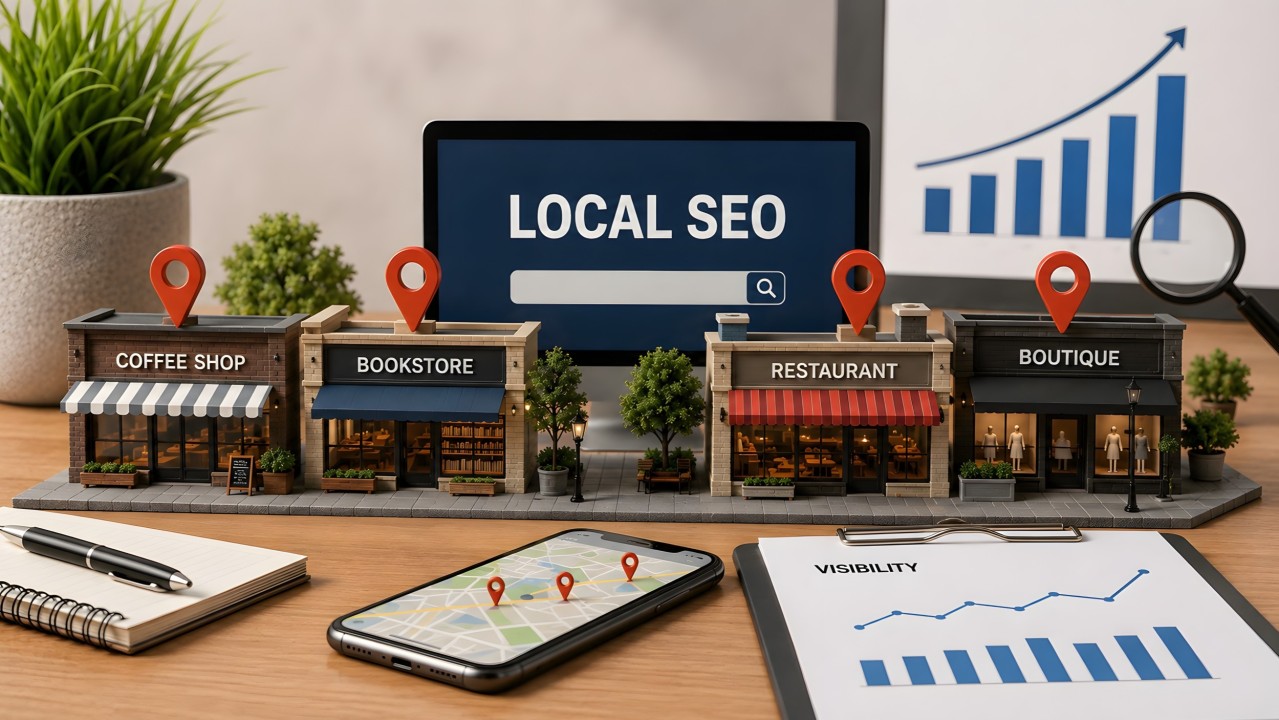
Use SEO to capture existing demand
One of the most valuable alternatives to cold calling is appearing when potential customers are actively searching for help.
This is where Search Engine Optimisation becomes particularly powerful. Instead of contacting people who may have no current requirement, SEO allows businesses to become visible when a prospect is already researching a relevant product, service or problem.
Commercial search intent can be extremely valuable because the customer has initiated the journey. They have identified a need and are looking for information or potential suppliers.
However, effective B2B SEO requires more than targeting obvious service keywords. Customers search throughout the buying process. They investigate problems, compare different approaches, research costs, explore risks and ask questions about implementation.
Businesses that create useful content across these different stages can become visible much earlier in the decision-making journey. By the time the customer begins actively comparing suppliers, they may already recognise the organisation that has been helping them understand the subject.
This is where SEO becomes more than a traffic strategy. It becomes part of demand generation and sales enablement.
Prepare for AEO and GEO as search becomes conversational
Traditional search remains important, but businesses also need to recognise that customers are increasingly using AI assistants and conversational search platforms during research.
Instead of searching for a phrase such as “best CRM consultant UK”, a decision-maker might ask an AI assistant to explain what type of CRM implementation partner would be suitable for a growing B2B organisation, what questions they should ask potential suppliers and which companies they should consider.
This is changing how businesses need to think about digital visibility.
Answer Engine Optimisation focuses on creating clear and useful responses to the questions customers ask, while Generative Engine Optimisation considers whether AI systems can understand an organisation’s expertise and potentially incorporate it within generated responses.
For B2B companies, this reinforces the importance of detailed service information, original thought leadership, case studies, strong digital authority and a consistent wider brand presence.
Businesses that invest in these areas are not simply trying to appear in AI answers. They are building the depth and credibility required to influence customers regardless of how those customers choose to conduct their research.
Create content that helps customers make decisions
Content marketing becomes significantly more effective when businesses stop asking, “What should we post?” and start asking, “What does our customer need to understand before they buy?”
The answers usually already exist inside the organisation. Sales teams know the questions prospects repeatedly ask. Technical teams understand common mistakes. Customer service teams know where confusion occurs. Leadership teams understand the trends affecting the industry.
These insights can become articles, guides, videos, webinars, case studies and social content.
The strongest B2B content helps customers progress towards a decision. It might explain the difference between two solutions, discuss realistic costs, identify common implementation challenges or help a customer understand when a particular service is appropriate.
This approach positions the business as a source of expertise rather than simply another company trying to sell something.
Over time, useful content also compounds. An article can continue attracting visitors through search, be shared by sales teams, repurposed on LinkedIn, included in email campaigns and referenced during customer conversations long after it was originally published.
Cold calls disappear as soon as they end. Strong content can continue generating value for years.
Turn LinkedIn into an always-on networking platform
For many B2B organisations, LinkedIn has become one of the most important platforms for building professional visibility and relationships.
The opportunity extends far beyond posting occasional company updates.
Decision-makers use LinkedIn to follow industry developments, discover expertise, research potential suppliers and understand the people behind organisations. This makes the platform particularly valuable for businesses selling complex products and services where trust influences purchasing decisions.
A strong LinkedIn strategy combines company content with visible expertise from individuals within the organisation. Directors, sales leaders, consultants and technical specialists can share insights drawn from real experience, comment on industry developments and participate in conversations with relevant audiences.
This creates familiarity over time. A prospect may encounter someone’s content repeatedly for several months before ever needing the service they provide. When a requirement eventually appears, the organisation is no longer completely unknown.
This is fundamentally different from approaching a stranger with a sales message. The relationship may not yet be personal, but familiarity has already begun reducing the distance between the prospect and the business.
Use LinkedIn outreach without turning it into digital cold calling
LinkedIn can also support proactive lead generation, but many businesses make the mistake of simply transferring traditional cold-calling behaviour into automated messages.
A connection request is followed seconds later by a long sales pitch. If the prospect does not reply, another automated message arrives several days later, followed by another attempt asking whether they saw the previous one.
This may generate occasional opportunities, but it can also damage brand perception.
Better LinkedIn outreach begins with relevance. Businesses should identify appropriate prospects, understand why there may be a potential fit and create a reason for starting a conversation.
That conversation does not always need to begin with a sales proposition. Sharing a useful resource, commenting intelligently on something the prospect has published or discussing a relevant industry issue can provide a much more natural introduction.
Content and outreach are particularly effective when used together. If prospects regularly encounter valuable content from the organisation, a subsequent direct message has context. The salesperson is no longer completely unfamiliar.
The objective should be to use LinkedIn to accelerate relationships rather than automate interruptions.
Email marketing remains one of the most valuable B2B channels
Email is sometimes treated as an old marketing channel compared with AI, social media and newer digital platforms, yet it remains extremely valuable precisely because businesses can develop a direct relationship with their audience.
Social media audiences are effectively rented. Search visibility depends upon external platforms. An email database is an audience the organisation can communicate with directly, subject of course to appropriate data protection and marketing regulations.
For B2B businesses, email works particularly well as a nurturing channel. A prospect who downloads a guide, attends an event or subscribes to industry insights may not be ready to buy immediately. Useful email communication allows the organisation to remain visible while continuing to provide value.
The key is relevance. Constant promotional emails quickly become noise. Educational insights, practical advice, new research, case studies and genuinely useful resources give people a reason to continue paying attention.
When a commercial requirement eventually develops, repeated helpful communication can mean the business is already familiar and trusted.
Outbound email can work when it is genuinely targeted
There is also a significant difference between strategic B2B email outreach and sending enormous volumes of generic cold emails.
Poor outbound campaigns prioritise scale. Thousands of contacts receive essentially the same message, often containing vague promises about increasing revenue, booking more meetings or transforming the recipient’s business.
Effective outbound email focuses much more heavily on relevance.
The sender understands why the organisation has been selected, who the appropriate decision-maker is and what specific problem might justify a conversation. The message is concise, credible and based upon something meaningful rather than artificial personalisation.
This naturally reduces volume, but that is not necessarily a disadvantage.
One hundred carefully selected prospects with a genuine reason to consider the service may create more commercial value than ten thousand poorly targeted contacts.
Technology can support research and campaign management, but businesses should resist using automation simply to increase the amount of unwanted communication they produce.
Use lead magnets to identify early-stage interest
Not every website visitor is ready to speak with sales, but some may be willing to exchange contact information for something genuinely valuable.
This is where lead magnets can help.
A useful industry report, practical guide, checklist, benchmark, calculator or webinar can provide value while allowing the business to identify people interested in a relevant subject.
The quality of the resource matters enormously. Generic downloadable PDFs created purely to capture email addresses are unlikely to create a positive impression. The content should provide enough value that the recipient feels the exchange was worthwhile.
Once someone has engaged, the organisation can continue nurturing the relationship through relevant content rather than immediately treating the download as a request for a sales call.
This distinction is important. Downloading a guide demonstrates interest in a subject, not necessarily an immediate desire to purchase.
Respecting that difference can create significantly stronger long-term relationships.
Case studies can become powerful lead-generation assets
B2B purchasing decisions frequently involve risk. The buyer may be committing substantial money, time or internal resources, and making the wrong choice can have consequences for both the organisation and the individual responsible for the decision.
Case studies help reduce that uncertainty.
Rather than telling customers that your organisation has experience, they demonstrate it. A strong case study explains the challenge, the solution, the process and the outcome while giving prospects enough context to recognise similarities with their own situation.
Case studies can support almost every part of lead generation. They can rank in search, appear within social media content, be included in email campaigns, support sales conversations and provide evidence on service pages.
They are particularly effective when specific rather than generic. Real detail about the customer’s situation and measurable outcomes creates significantly more credibility than a short paragraph stating that a project was successful.
Proof can often persuade more effectively than promotion.
Video can shorten the distance between prospect and supplier
B2B buying decisions are made by people, and video provides an effective way to make organisations feel more human before a direct conversation occurs.
Expert interviews, customer stories, demonstrations, explainers and thought-leadership videos allow prospects to see and hear the people behind the company.
This can be particularly valuable for consultancy, professional services and technical organisations where expertise and personal relationships play an important role in purchasing decisions.
A potential customer who has watched several videos from a company’s leadership or technical team may feel significantly more familiar with the organisation when they eventually make contact.
Video can also be repurposed extensively. A single expert interview might become shorter social clips, written articles, email content, sales resources and website material.
The objective is not simply generating video views. It is using visual content to build trust and familiarity throughout the customer journey.
Paid advertising can accelerate lead generation
Organic channels create valuable long-term assets, but they take time to develop. Paid advertising can provide a faster route to relevant audiences when campaigns are strategically planned.
Search advertising is particularly useful for capturing existing demand because businesses can appear when potential customers are actively searching for particular services. Paid social campaigns can support awareness, retargeting and content distribution among carefully selected audiences.
The danger is assuming paid advertising can compensate for weak positioning or a poor website.
Advertising can deliver visitors, but the website still needs to convert them. If the landing page provides little information, lacks trust or makes the next step difficult, increasing advertising spend simply increases the cost of the problem.
Paid media works best when it accelerates an already coherent customer journey rather than attempting to create one by itself.
Build referral and partnership channels
Digital marketing is extremely powerful, but some of the strongest B2B opportunities still originate from relationships.
Existing customers, professional partners, suppliers, consultants and complementary businesses can all become valuable sources of referrals.
The challenge is that many organisations leave referrals entirely to chance.
Businesses can take a more deliberate approach by maintaining stronger relationships after projects finish, sharing useful content with existing customers and building partnerships with organisations serving similar audiences without directly competing.
A web development company might build relationships with IT consultancies. An engineering supplier might develop partnerships with complementary technology providers. A professional services firm might work closely with accountants, lawyers or other advisers.
The best partnerships create mutual value rather than simply exchanging contact details.
These relationships can become particularly valuable because referred prospects often arrive with an existing level of trust.
Use events as the beginning of the journey, not the end
Trade shows, conferences, networking events and webinars can generate excellent B2B opportunities, but businesses frequently judge their success by the number of contacts collected during the event itself.
The greater opportunity often comes afterwards.
An event can create initial awareness, but content and digital marketing can continue developing those relationships long after everyone has gone home.
Interviews recorded at a conference can become social media content. Presentations can be converted into articles. Attendees can receive useful follow-up resources, while relevant prospects can be connected with on LinkedIn.
The objective should be to integrate events into the wider lead-generation ecosystem rather than treating them as isolated campaigns.
A twenty-minute conversation at an exhibition may be valuable, but the months of communication that follow can ultimately determine whether it becomes a commercial opportunity.
Marketing and sales need to work from the same strategy
Generating B2B leads without relying on cold calling requires stronger alignment between marketing and sales.
Marketing needs to understand which opportunities are commercially valuable, what questions prospects ask and where deals typically become difficult. Sales teams need visibility of the content, campaigns and digital activity influencing potential customers before they make contact.
When these functions operate separately, valuable information is lost.
Marketing may celebrate a high volume of leads that sales considers irrelevant. Sales may repeatedly answer customer questions that marketing could address through content. Valuable case studies may remain hidden because nobody captures the knowledge created during successful projects.
A connected approach turns this information into a continuous improvement cycle.
Sales conversations inform content. Content supports search. Search generates opportunities. Customer success creates case studies. Case studies strengthen future sales conversations.
That is how lead generation begins to compound.
Measure qualified opportunities rather than lead volume
A common problem in lead-generation strategies is an excessive focus on volume.
Businesses celebrate hundreds of downloads, form submissions or new contacts without understanding whether those activities create meaningful commercial opportunities.
A better approach connects marketing performance with sales outcomes.
Which channels generate qualified enquiries? Which content influences high-value opportunities? Which campaigns produce customers rather than simply contacts? What is the average value of leads from different sources, and how long do those opportunities take to convert?
These questions provide a much clearer picture of marketing effectiveness.
Ten high-quality opportunities can be considerably more valuable than a thousand names in a database.
The objective of B2B lead generation should therefore not be generating as many leads as possible. It should be creating enough of the right opportunities to support sustainable growth.
AI can make lead generation more intelligent—but not more human
Artificial intelligence is already changing B2B marketing. Businesses can use AI to analyse data, research accounts, personalise content, identify patterns, support sales teams and automate repetitive processes.
These capabilities can make lead generation significantly more efficient.
However, there is a danger that businesses use AI primarily to increase volume. More automated emails, more LinkedIn messages and more generic content do not necessarily create better results.
The strongest use of AI is often behind the scenes. It can help sales teams research prospects before making contact, identify relevant signals within CRM data or help marketing teams repurpose valuable expertise across multiple channels.
AI should remove unnecessary work so people can spend more time on activities where humans create the greatest value: understanding customers, developing ideas, building trust and having meaningful conversations.
The future of B2B lead generation may be highly automated operationally while becoming increasingly human at the point where relationships actually matter.
Build a lead-generation ecosystem rather than another campaign
The biggest opportunity for businesses is to stop viewing each lead-generation activity as a separate campaign.
SEO should connect with content. Content should support LinkedIn. LinkedIn should build familiarity that improves outreach. Website visitors should encounter relevant case studies. Email should nurture people who are not ready to buy. Events should create content and relationships that continue developing afterwards.
When these channels work together, their combined value becomes significantly greater.
A prospect might first discover an article through Google, encounter the company’s director on LinkedIn several weeks later, watch a video, visit the website again, read a case study and eventually respond to an email.
Which channel generated the lead?
The answer is all of them.
Modern B2B customer journeys are rarely linear. Businesses that recognise this can build marketing systems around how customers actually behave rather than attempting to attribute every opportunity to a single interaction.
The Best B2B Leads Often Aren’t Cold at All
Cold calling can still have a place within a B2B sales strategy. A talented salesperson contacting the right organisation at the right moment with a relevant proposition can create significant opportunities.
The problem is relying upon cold calling because no other reliable source of demand exists.
A stronger strategy creates multiple routes through which potential customers can discover the business. Search captures existing demand. Content demonstrates expertise. LinkedIn builds familiarity. Email nurtures relationships. Video develops trust. Case studies provide proof. Paid media accelerates visibility, while partnerships and events create valuable human connections.
These activities do not remove the need for salespeople.
They make sales conversations better.
Instead of calling someone who has never heard of the organisation, the sales team increasingly speaks with people who may already recognise the brand, understand its expertise and have consumed useful content.
That changes the conversation from “Who are you and why are you calling me?” towards “I’ve seen some of your work and I’d like to understand whether you can help us.”
That is a fundamentally stronger position from which to sell.
The future of B2B lead generation is therefore not necessarily about choosing between inbound and outbound, digital and traditional, or marketing and sales. It is about connecting them into a system that creates demand, develops trust and identifies genuine opportunities.
Cold calling tries to find customers.
Scott Jones is the CEO of a full service, leading and award winning SEO & Digital Marketing Agency. 123 Internet® – Digital Marketing Growth Agency support a local, national and international client base with AI-led digital marketing strategy, web design and e-commerce, creative branding, design and print, social media, lead generation, SEO/PPC, AI Search Optimisation and videography focused on ROI.
For more information about our services or advice on how to improve your online marketing activities please reach out and connect with us via our website or our social media channels.